Sell what's actually on the shelf.
Grocery platforms don't fail at the storefront — they fail at stock, slots and substitutions. We build the catalogue, the picker app and the back office that keep those three honest.
- Experienced engineers
- NDA before day one
- You own the code
- Customer + picker apps
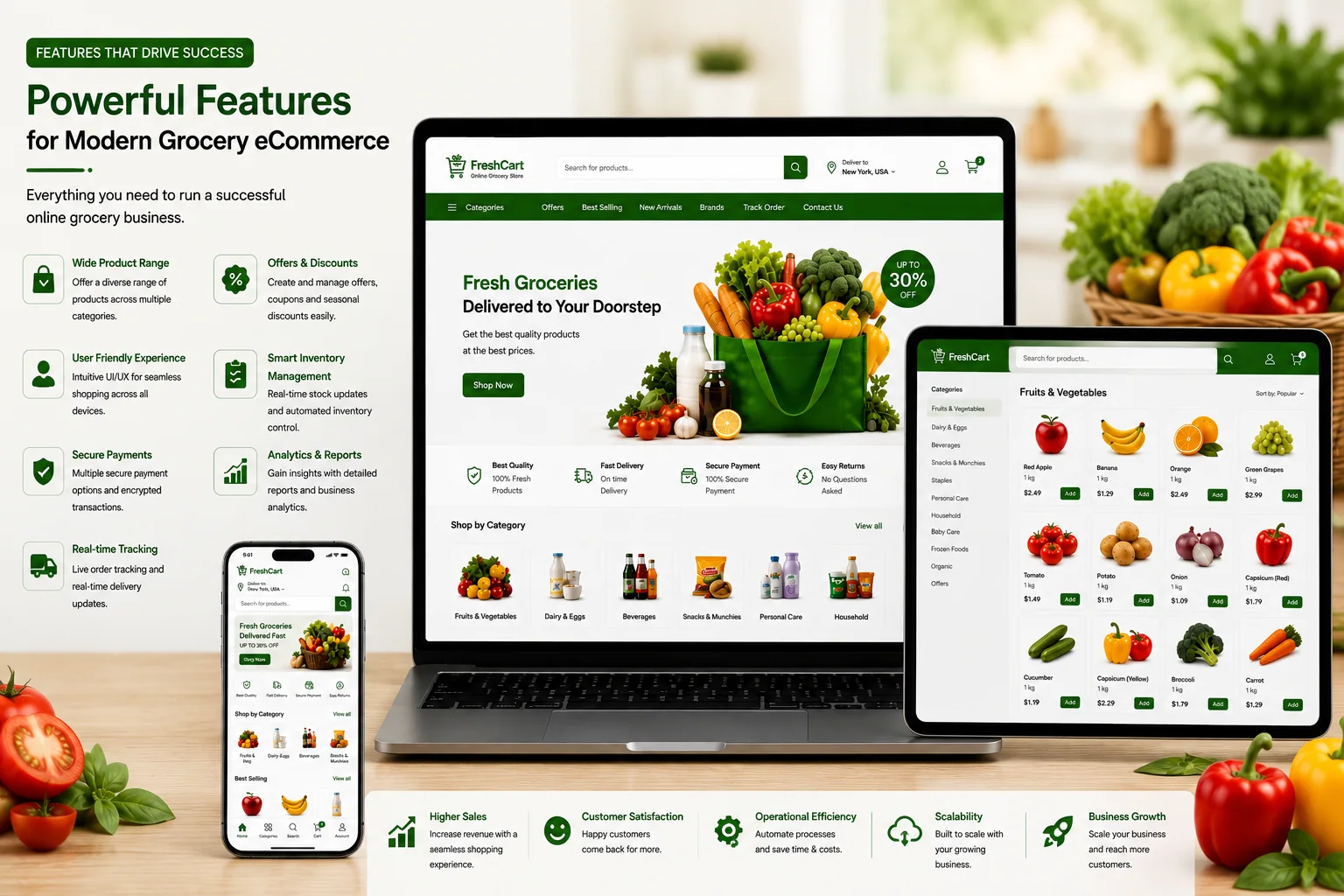
The storefront is the easy part
Four failures cost grocery businesses more than anything on the product page.
Overselling
The app sells what the shelf no longer has, and someone calls the customer to apologise.
Substitutions nobody agreed to
A picker swaps a brand, the customer refuses it at the door, and the order comes back.
Slots that overbook
More orders promised in a window than pickers and riders can actually clear.
Cold chain gaps
Frozen and chilled items sit in the wrong place between picking and handover.
Six systems behind one grocery order
Open any of them to see what sits underneath.
Catalogue and pricingSKU-level catalogue with variants, units and pack sizes, zone-wise pricing, and offers that apply per store rather than globally.
- Units, weights and pack sizes
- Zone and store-level pricing
- Offers, coupons and bundles
Real-time inventoryStock tracked per store or dark store, with expiry and batch handling, low-stock alerts and automatic de-listing when a line runs out.
- Batch and expiry tracking
- Low-stock and reorder alerts
- Auto de-list on zero stock
Slots and capacityDelivery windows defined per zone and store, with capacity tied to pickers and riders on shift so a slot closes before it is oversold.
- Capacity per zone and window
- Express and scheduled slots
- Cut-offs and blackout days
Picking and packingA picker app with zone-ordered lists, barcode scanning, weight capture for loose items and a substitution flow the customer approves.
- Zone-ordered pick lists
- Scan and weight capture
- Customer-approved substitutions
Payments and walletsUPI, cards, net banking, COD and wallets, with partial refunds for missing lines and settlement reports per store or vendor.
- UPI, cards, COD, wallet
- Partial refunds per line
- Store and vendor settlement
Returns and supportStructured reasons for refused or damaged items, instant refund rules, and a support view that shows the whole order history in one place.
- Reason codes per item
- Automatic refund rules
- One-screen support view
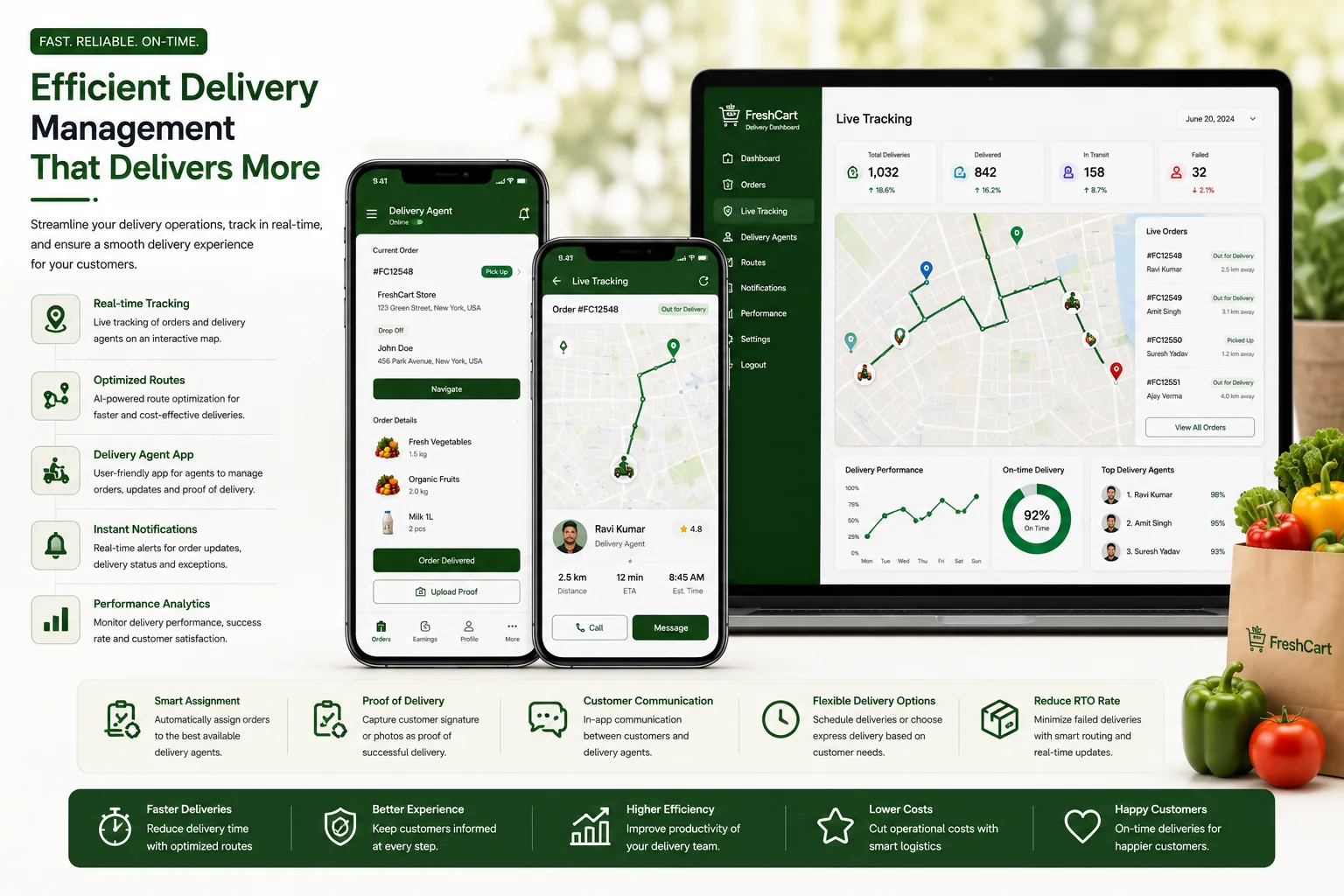
Customer app, picker app, rider app and the admin behind them — built as one system, not four.
Browse to doorstep, without a phone call
Five stages, each one a status the customer can see and a record your ops team can audit.
- 01
Browse
Search, categories and reorder-from-history.
- 02
Cart
Live stock check and slot availability before payment.
- 03
Pick
Zone-ordered list, scanning and weight capture.
- 04
Pack
Crate assignment, cold-chain separation, seal and label.
- 05
Deliver
Handover with OTP, refused-item handling and refund.
- Live stock check at checkout
- Slot capacity per zone
- Scan + weight at the shelf
- Cold lines crated apart
- OTP and photo at handover
- Per-line refund if refused
One number, visible everywhere
Every screen reads the same stock figure — storefront, picker app and back office. Units are held the moment an order is placed and released if payment fails, so the last pack can't be sold twice.
A line at zero leaves the storefront automatically — no manual de-listing.
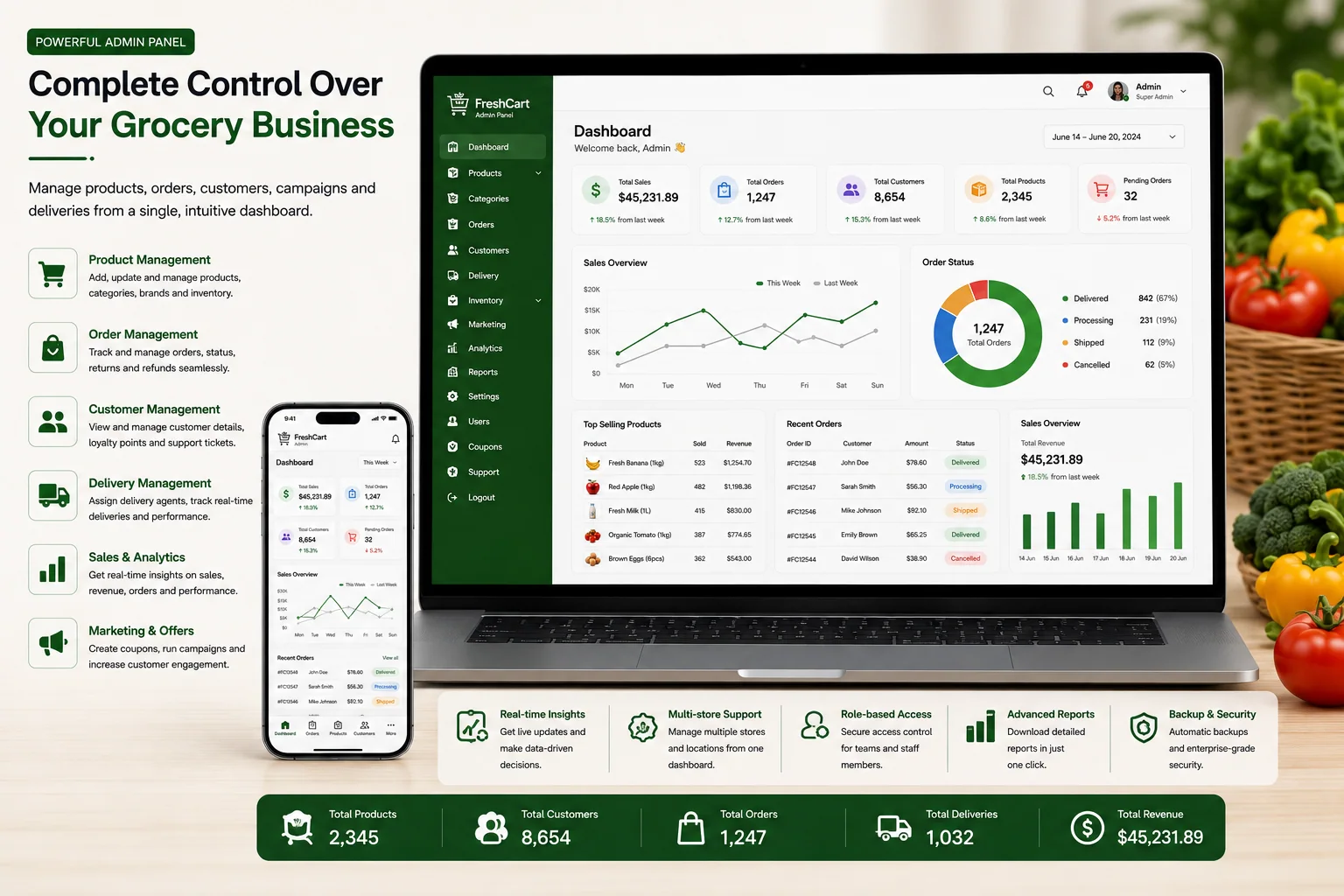
The admin view reads the same stock figure the storefront sells from — orders, levels and store performance in one place.
Four ways grocery businesses actually run
Built for minutes, not hours.
A closed store that exists only to be picked from. Everything hinges on layout-aware picking and stock that is never wrong.
- Zone-ordered picking
- Live stock per store
- Express slot capacity
- Rider handover at the door
Useful in four places. Decoration everywhere else.
Grocery is one of the few categories where machine learning has obvious work to do, because the same customer buys the same things on a rhythm and perishable stock punishes bad guesses.
Search that understands groceries
"atta", "wheat flour" and a misspelt brand should land on the same shelf — synonyms, local names and units handled properly.
Reorder and basket prediction
Weekly staples surfaced as a one-tap reorder, built from a customer's own history rather than a generic bestseller list.
Demand forecasting for perishables
Stock suggestions per store and per day so fresh lines are ordered against expected demand instead of last week's guess.
Smarter substitutions
Alternatives ranked by what customers in that store actually accepted before, so fewer swaps come back at the door.
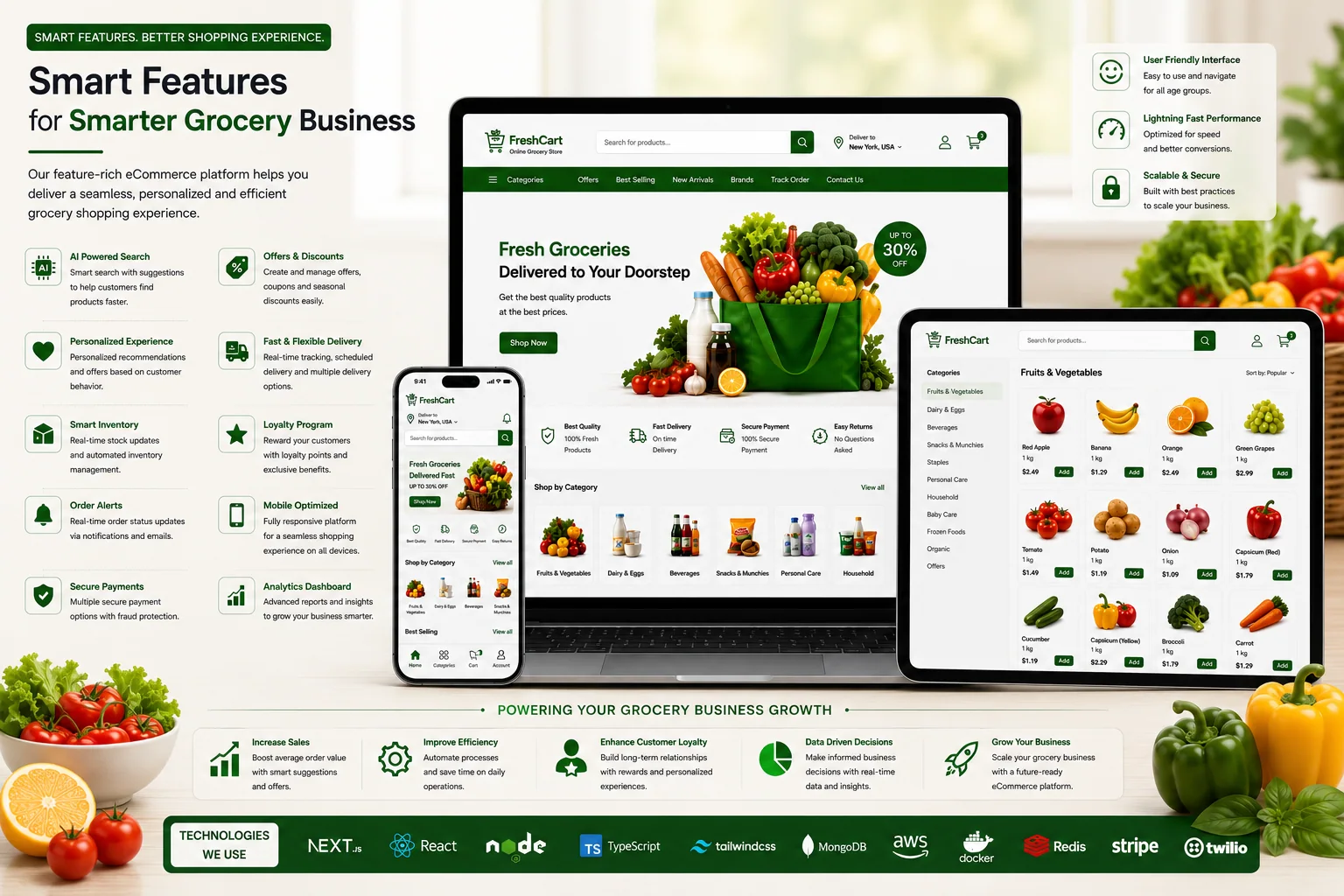
Grocery is a repeat business or it is nothing
Four levers decide whether a grocery platform compounds or leaks. We build for them, and report each one against your own baseline — not a borrowed benchmark.
How you see it
- A weekly report — the same four numbers, per store, mailed and on the dashboard.
- Your baseline — measured from your own history, not an industry benchmark.
- Cuts that matter — store, zone, cohort and acquisition source, not one blended figure.
- Raw export — so your analyst can check the working rather than trust a chart.
Second-order rate
How many first-time customers come back within a month. It decides whether acquisition spend compounds or evaporates.
- Reorder list built from their own history
- Win-back nudge when a weekly staple is skipped
- First-order experience tracked separately
Cohort · per source
Basket size
What a customer actually puts in the bag, and which nudges moved it — not a vanity average.
- Bundles and recipe-style add-ons
- Free-delivery threshold tuned per zone
- "Forgot something?" step before payment
Per store · per week
Fill rate
The share of ordered lines actually delivered. The clearest predictor of whether somebody orders a second time.
- Stock held the moment an order is placed
- Substitutions the customer approves in-app
- Short-supply lines flagged before the slot opens
Per store · per SKU
Delivery cost per order
What it costs to get one basket to a door, visible before the number quietly doubles.
- Batching of nearby orders in one run
- Slot density shaped by rider availability
- Zone boundaries reviewed against real routes
Per zone · per day
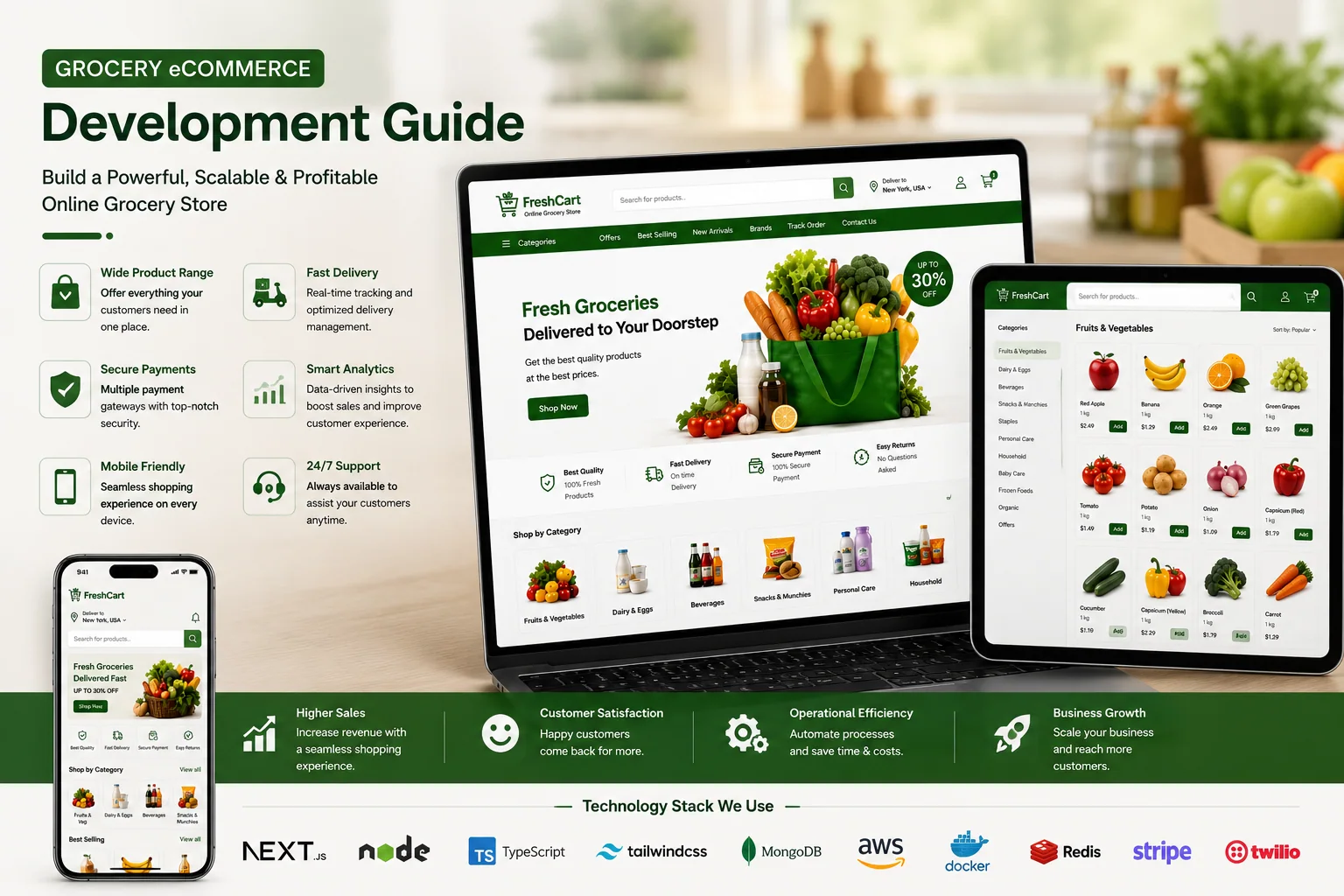
On the weekly report
- Second-order rateCohort · per source
- Basket sizePer store · per week
- Fill ratePer store · per SKU
- Delivery cost per orderPer zone · per day
Same figures your ops and finance teams already argue about — in one place, per store.
- Per store
- Per zone
- Per week
- By acquisition source
- Raw data exportable
No promised percentage here — the baseline is yours, and the reporting is built so the change is measurable against it.
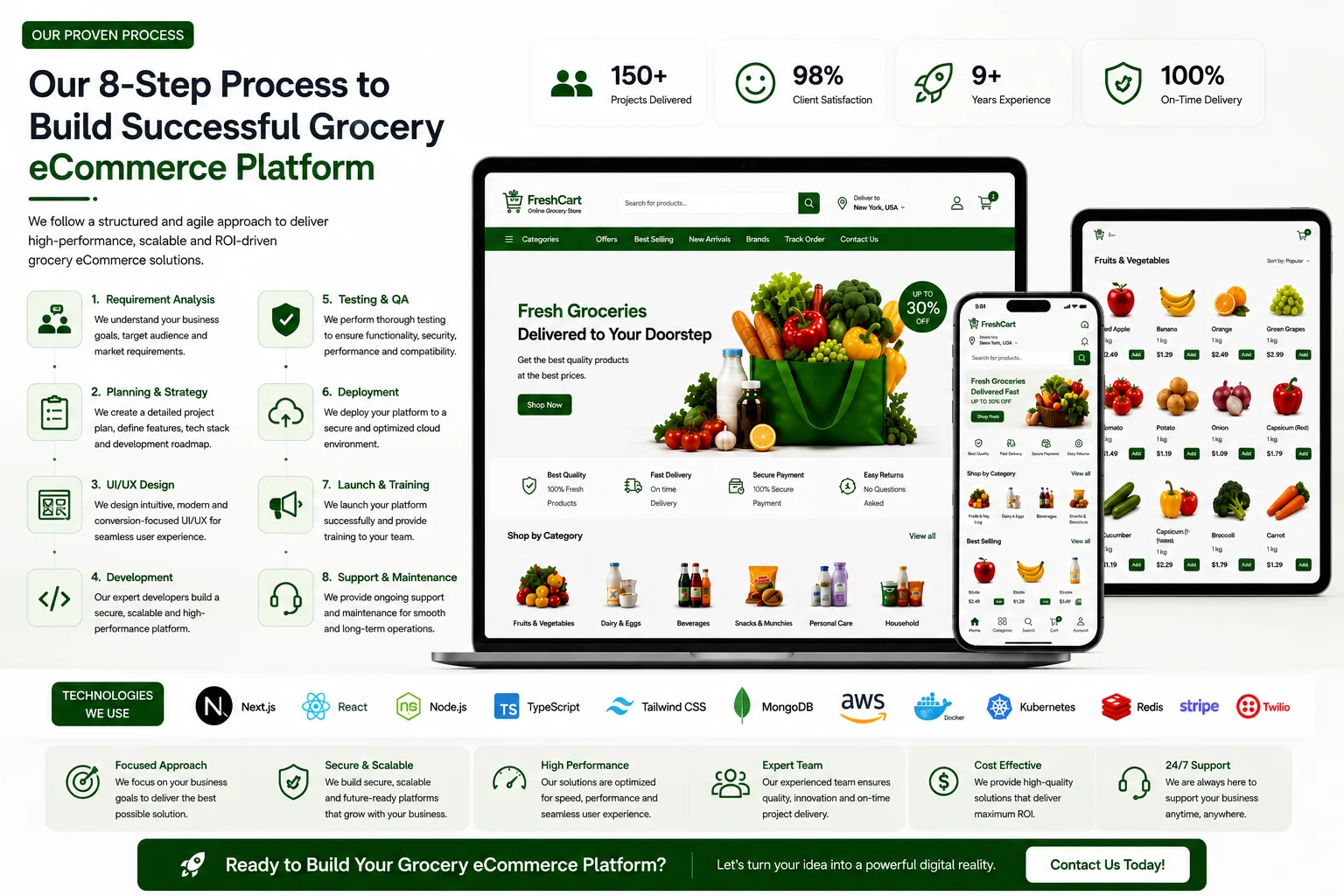
The same four steps, every time
So you always know what happens next, what it costs and when you'll see it working.
- 01
Product review
A free 30-minute call with a senior engineer. We walk your catalogue, your stores and your delivery promise before anyone talks about tech.
- 02
Fixed-scope proposal
Modules, timeline and cost in writing within 5 business days — including what we'd leave out of version one.
- 03
Build in the open
Short cycles with a demo every week. You place an order, pick it and deliver it in the real system, not in slides.
- 04
Launch and look after it
We ship, then stay on as the team that already knows your platform — new stores, new zones, new categories.
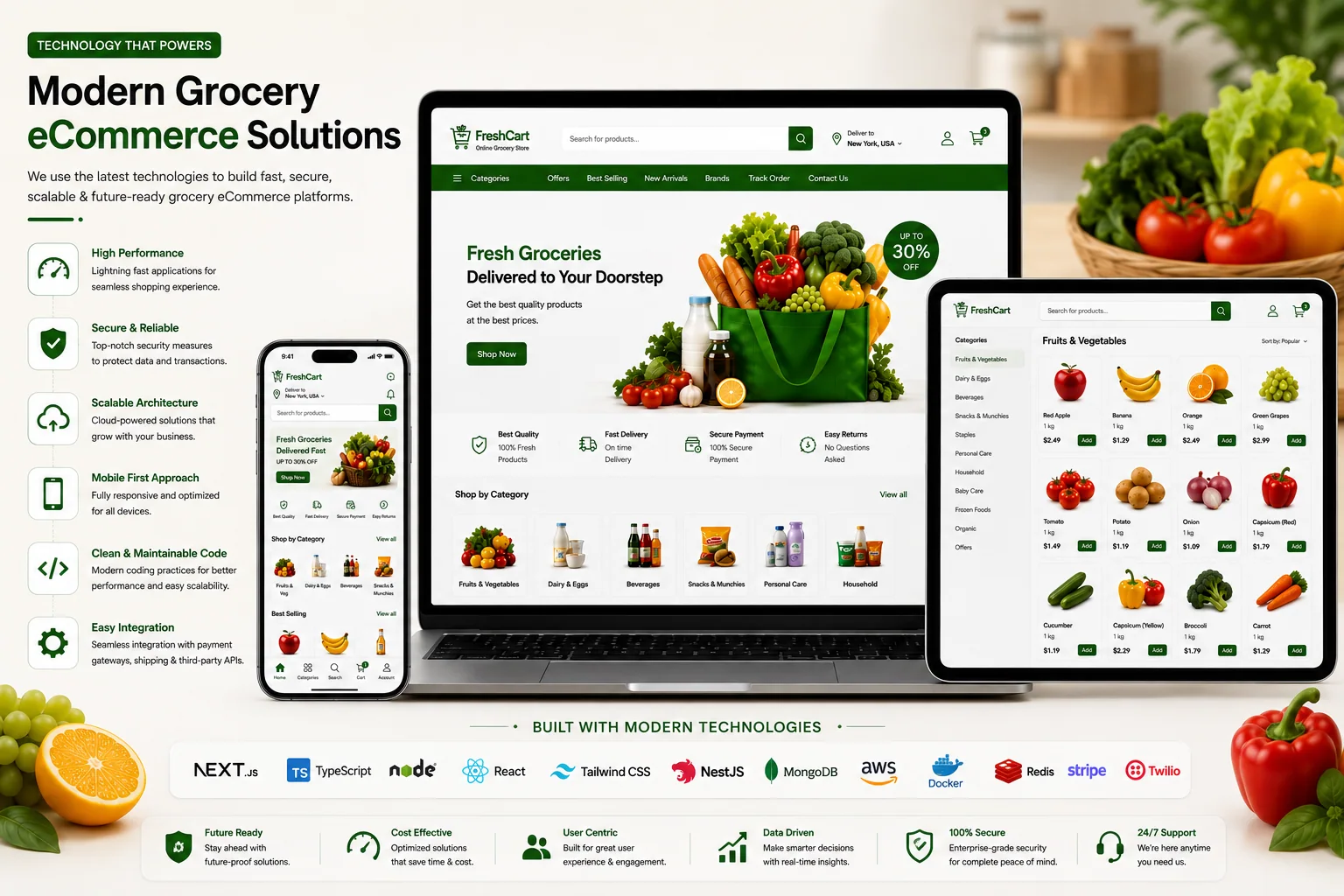
Built on tools your team can hire for
- Customer apps
- React Native / Flutter, or native iOS and Android
- Storefront & admin
- React, TypeScript, Next.js where SEO matters
- Services
- Node.js, PostgreSQL, Redis for stock and slot locks
- Search
- Typesense / Elasticsearch for catalogue search
- Payments
- Razorpay, Stripe, PayU, UPI intent flows, COD
- Maps & delivery
- Google Maps, Mapbox, your own or third-party fleet
It has to fit what you already run
Most grocery businesses are not starting from nothing — there is a POS, an accountant's format, a fleet and a WhatsApp number customers already use.
Payments
- Razorpay
- PayU
- Stripe
- UPI intent
- Cash on delivery
- Store wallets
Billing & books
- GST-compliant invoices
- Tally / Zoho exports
- Vendor settlement
- Credit notes
Stores & stock
- POS systems
- ERP sync
- Barcode / weighing scales
- CSV catalogue import
Delivery
- Own rider fleet
- Third-party fleets
- Google Maps
- Mapbox routing
Messaging
- WhatsApp Business
- SMS gateways
- Push notifications
- Email receipts
Insight
- GA4
- Mixpanel / Clevertap
- Looker Studio
- Exportable raw data
The parts your accountant asks about
Grocery has details other e-commerce doesn't: things sold by weight, items that expire, and refunds measured in single lines rather than whole orders.
Invoices that survive an audit
GST fields, HSN codes and sequential numbering on every order, with credit notes for partial refunds.
Loose items, weighed honestly
Ordered quantity versus picked weight recorded per line, and the customer charged for what actually went in the bag.
Batch and expiry discipline
Stock held by batch, with near-expiry lines flagged for markdown or removal before they reach a basket.
A refund trail
Every refund tied to a reason code, the picker or rider involved and the original payment method.
What you walk away owning
Whether we stay on afterwards or not, you should be able to run the platform without us.
The code, in your repository
Source, infrastructure config and deployment scripts live in an account you own from day one — not ours.
A runbook, not tribal knowledge
How to deploy, restore a backup, add a store, change slot capacity and roll back a release, written for your team.
Admin training
Recorded walkthroughs for catalogue, stock, slots, refunds and reporting, so new staff can be onboarded without us.
Test accounts and data
A staging environment with seeded stores and orders, so your team can try changes before customers see them.
Pick what fits where you are
Three shapes of engagement, one team behind all of them.

The people who scope your platform are the people who build it.
Same either way
- Experienced engineers on every project
- NDA signed before the first technical conversation
- A working demo every week, not a status report
- Code and IP transferred to you at the end
- The same team available for support after launch
Fixed-scope build
RecommendedA defined platform with a written scope, timeline and price. Best when the operating model is already settled.
- Best when
- Catalogue, stores and delivery promise are decided.
- You get
- Written scope, milestone plan and a fixed price before work starts.
Dedicated team
Senior engineers as an extension of your team, month to month. Best while the catalogue and the ops model are still moving.
- Best when
- Priorities change faster than a scope document can.
- You get
- A named team, weekly demos and the freedom to re-plan each sprint.
Take over what's live
We review an existing app or off-the-shelf platform, say honestly what state it's in, then fix, extend or migrate it.
- Best when
- Something already runs but slows the business down.
- You get
- A code and data review, a risk list, then fixes in priority order.
Real clients. Work you can check.
Verified client testimonials will be published after approval from our clients. Until then, here's what we built — and where you can see it live.
No invented reviews or ratings — only clients you can verify.
Questions about grocery platforms
Still unsure? Ask us directly — a senior engineer replies within one business day.
Stock is tracked at SKU level per store or dark store, with batch and expiry handling, low-stock alerts and automatic de-listing when a line hits zero. Reservations are held while an order is being paid for, so two customers can't buy the same last unit.
Tell us which part of the order breaks.
A free 30-minute product review with a senior engineer — honest advice on build, buy or fix, with no sales pitch.