

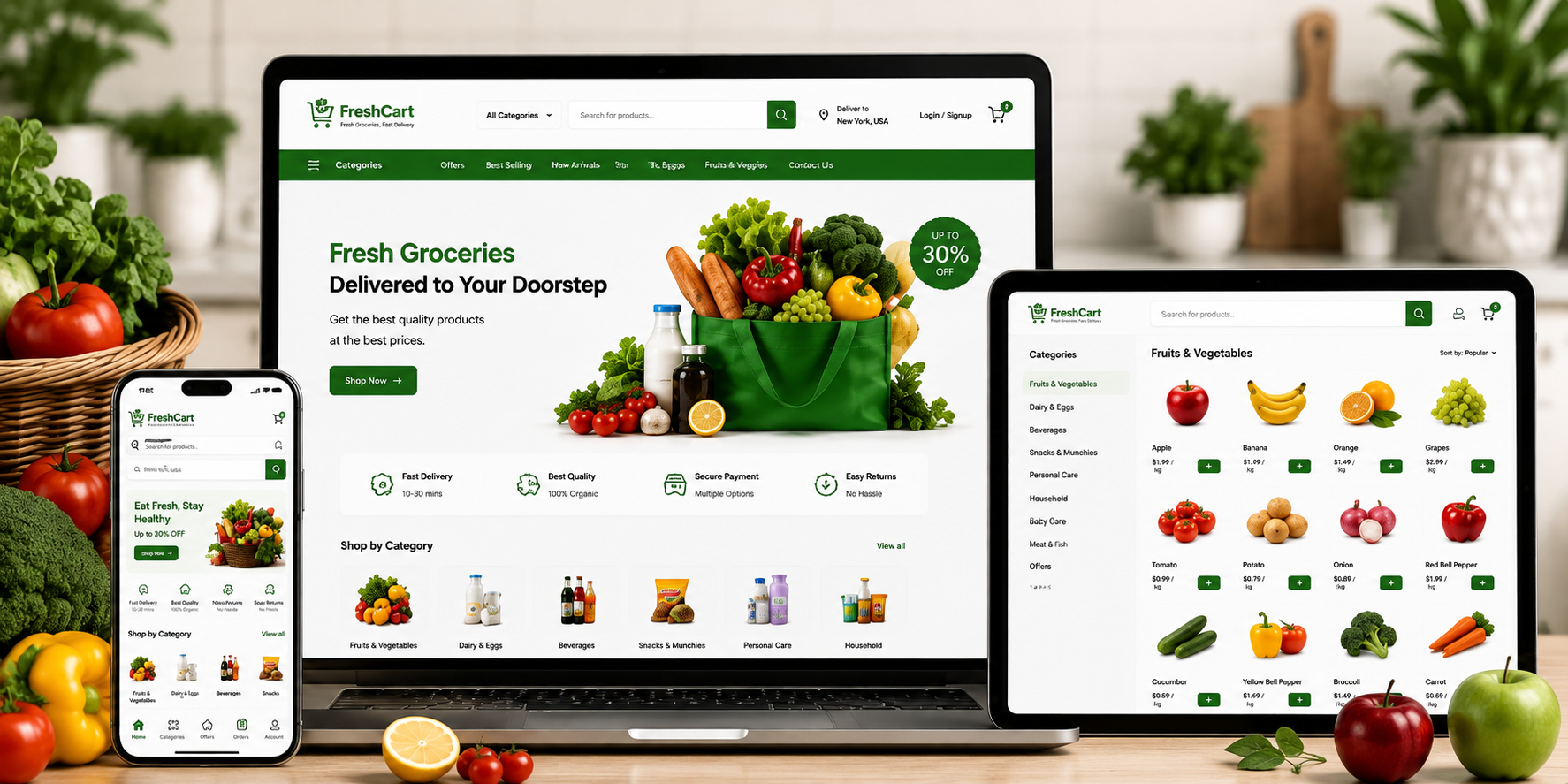
The grocery industry has evolved dramatically over the past few years, driven by changing consumer expectations, rapid digital transformation, and increasing demand for doorstep delivery. Today, customers expect fresh fruits, vegetables, dairy products, beverages, household essentials, and daily groceries to be available at their fingertips through a seamless online shopping experience. Businesses that fail to adapt to this shift risk losing customers to competitors offering faster, smarter, and more convenient digital services.
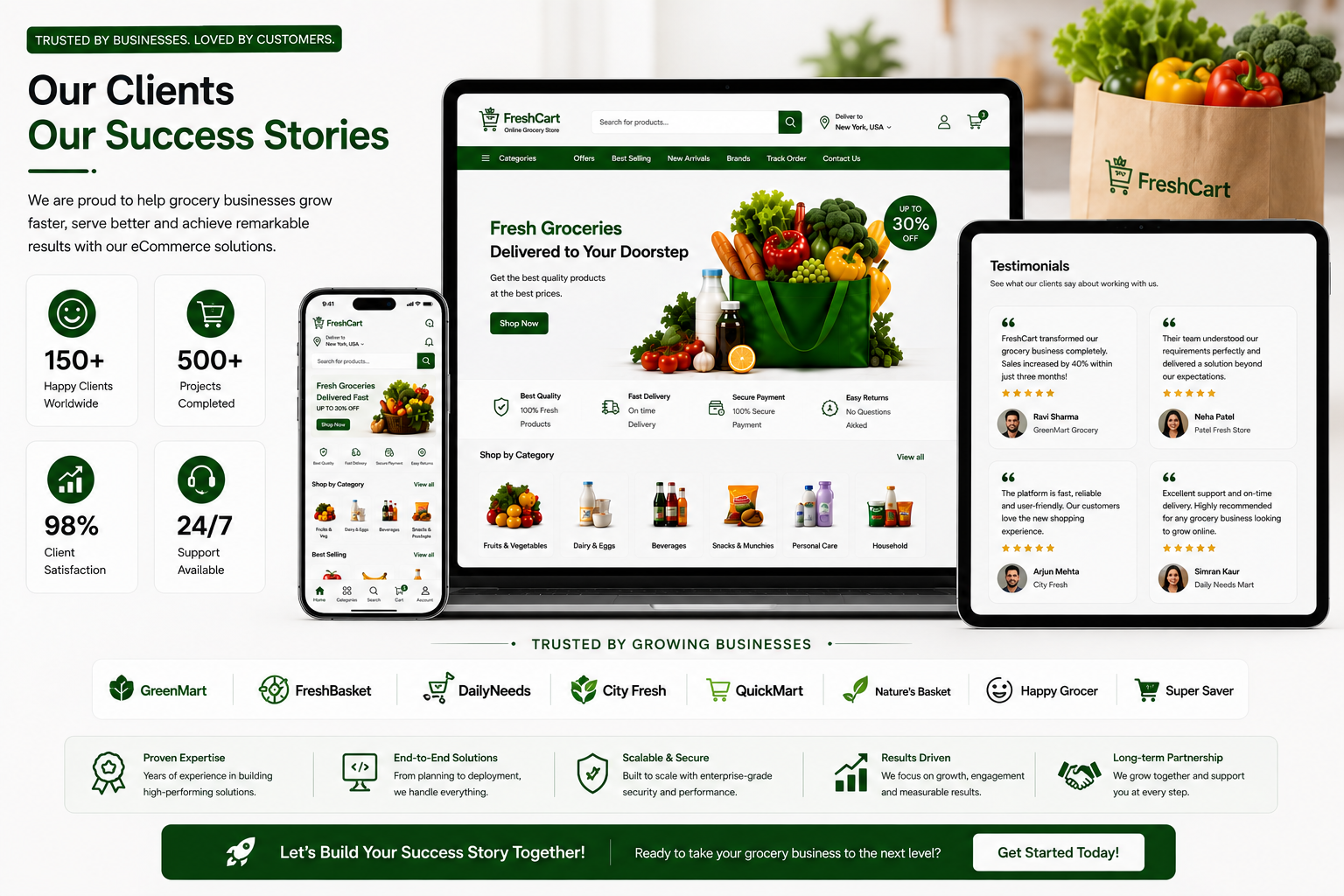
Grocery eCommerce development is no longer limited to creating a simple online store. Modern grocery platforms integrate intelligent search, AI-powered product recommendations, secure digital payments, inventory management, warehouse automation, delivery partner tracking, customer loyalty programs, and real-time analytics. Whether you’re a startup, supermarket chain, wholesaler, hypermarket, or local grocery business, investing in a custom grocery eCommerce solution enables you to reach a larger audience, improve operational efficiency, and generate sustainable long-term revenue.
In this comprehensive guide, you’ll learn everything about grocery eCommerce development, including essential features, technology stack, artificial intelligence integration, development process, estimated costs, monetization strategies, and best practices to build a scalable online grocery business in 2026.
What is Grocery eCommerce Development?
Grocery eCommerce development is the process of designing and developing digital platforms that enable customers to purchase groceries online through websites and mobile applications. These platforms connect customers, administrators, warehouse staff, suppliers, and delivery partners into a centralized system that manages every aspect of the business, from product listings and inventory management to payments and order fulfillment.
Unlike traditional eCommerce websites, grocery platforms require specialized functionality to handle perishable products, real-time inventory synchronization, delivery scheduling, warehouse operations, and route optimization. A successful grocery platform provides customers with a smooth shopping experience while helping businesses automate operations and reduce manual workload.
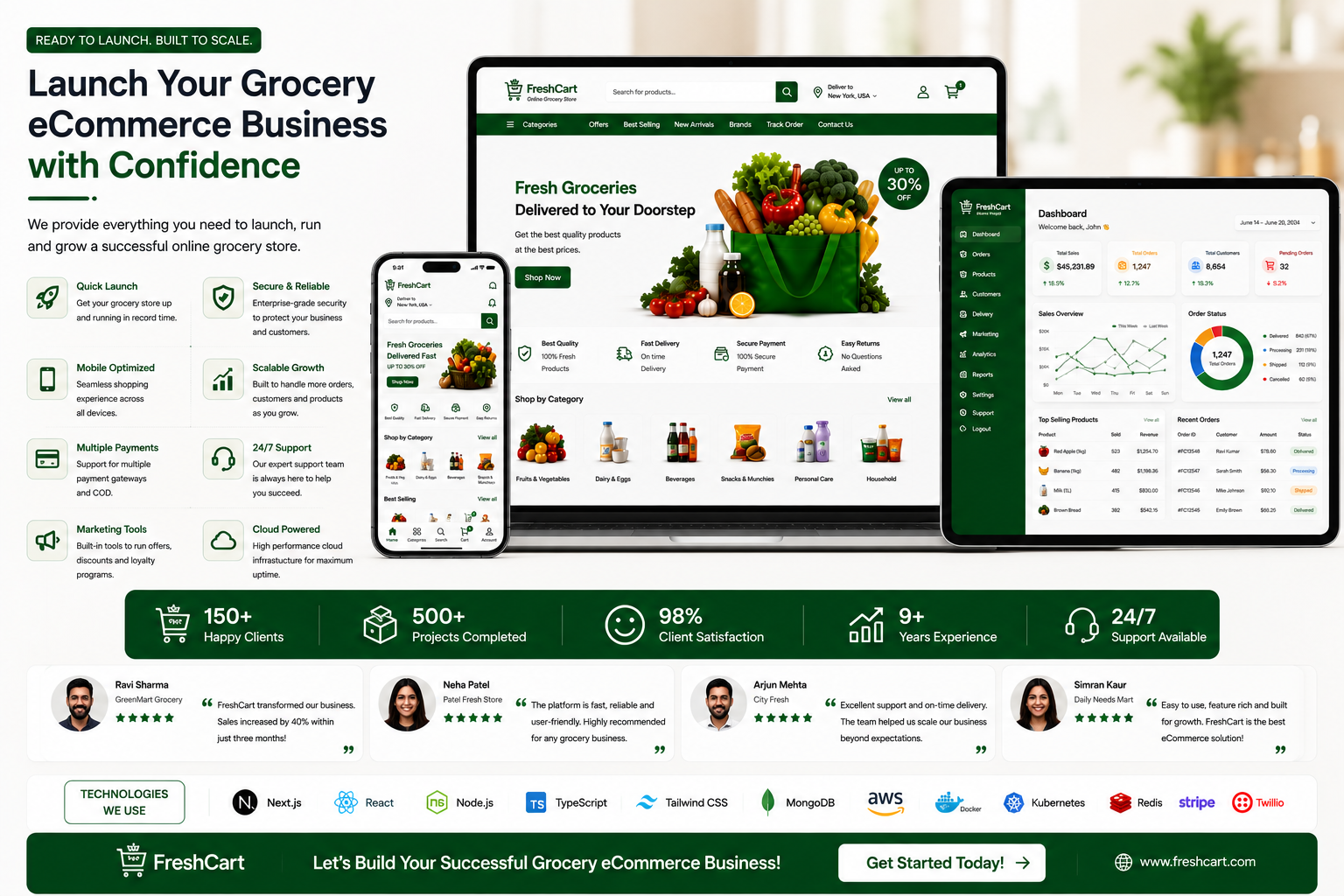
A complete grocery eCommerce solution generally includes:
- Customer Website
- Android Application
- iOS Application
- Admin Dashboard
- Delivery Partner Application
- Inventory Management System
- Order Management System
- Warehouse Management
- Analytics Dashboard
- Customer Support Panel
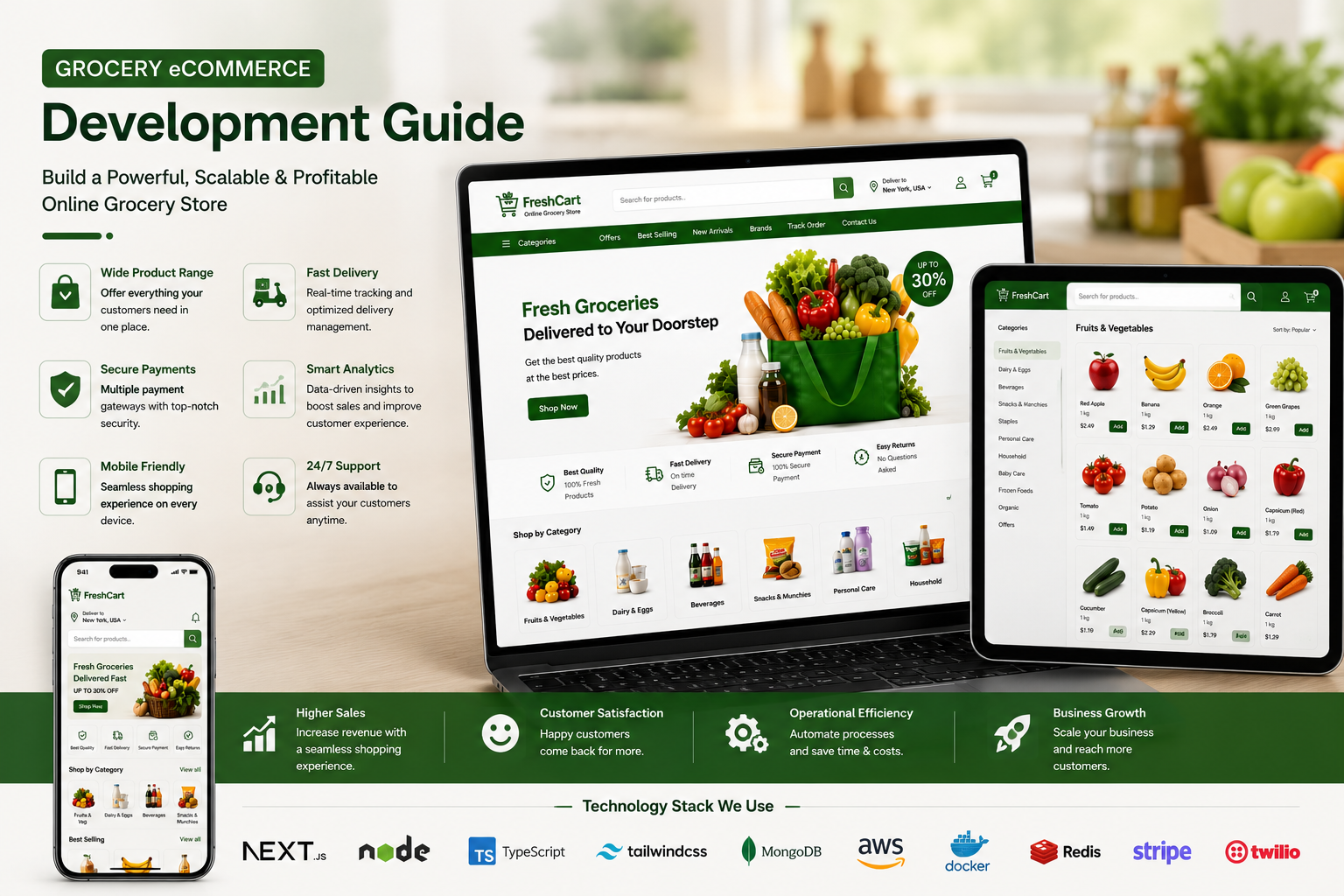
Why Grocery eCommerce is Growing Rapidly
The global grocery market is experiencing rapid digital growth as consumers increasingly prefer shopping online rather than visiting physical stores. Faster internet connectivity, smartphone adoption, secure payment gateways, and improved logistics have transformed how customers purchase daily essentials.
Several key factors are driving this growth:
- Rising demand for doorstep delivery.
- Increased smartphone usage across all age groups.
- Secure online payment systems.
- AI-powered personalized shopping experiences.
- Same-day and scheduled delivery services.
- Expansion of hyperlocal delivery networks.
- Better inventory and warehouse management technologies.
Customers now expect convenience, speed, and personalized experiences. Businesses that invest in grocery eCommerce platforms gain a significant competitive advantage by meeting these expectations while reducing operational costs.
Benefits of Grocery eCommerce Development
Building an online grocery platform offers numerous advantages for businesses of all sizes.
1. Reach More Customers
Unlike a physical grocery store that serves customers within a limited geographical area, an online grocery platform enables businesses to expand into multiple cities or regions without opening additional retail locations. This significantly increases customer reach and revenue opportunities.
2. 24/7 Online Shopping
Customers can browse products, place orders, and make payments at any time of the day. Round-the-clock availability improves customer satisfaction while generating sales even outside traditional business hours.
3. Higher Revenue Opportunities
Online grocery platforms increase average order value through personalized product recommendations, combo offers, subscription plans, loyalty programs, cross-selling, and upselling strategies.
4. Improved Customer Experience
Modern grocery applications provide features such as saved shopping lists, one-click reorder, favorite products, order tracking, personalized offers, and delivery scheduling, creating a seamless shopping journey.
5. Better Inventory Management
Real-time inventory synchronization reduces stock shortages, prevents overselling, minimizes food waste, and improves warehouse efficiency.
6. Data-Driven Decision Making
Advanced analytics dashboards provide valuable insights into customer behavior, popular products, seasonal demand, inventory movement, and overall business performance.
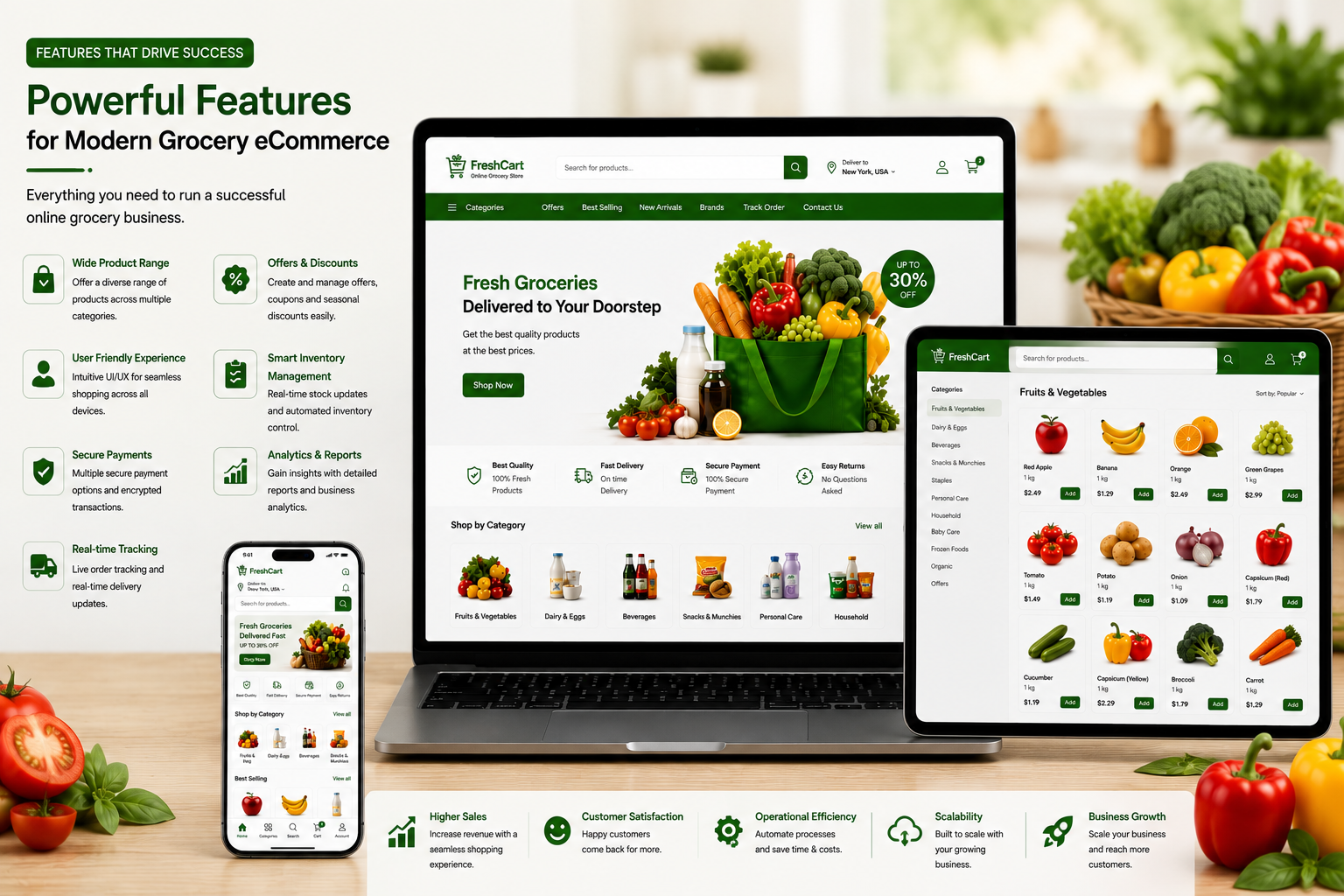
Essential Features of a Grocery eCommerce Platform
A successful grocery platform must provide a seamless experience for customers, administrators, and delivery partners.
Customer Features
- User Registration & Login
- Social Login
- OTP Verification
- Product Categories
- Smart Search with Filters
- AI Product Recommendations
- Wishlist
- Shopping Cart
- Secure Checkout
- Multiple Payment Options
- Live Order Tracking
- Delivery Scheduling
- Push Notifications
- Ratings & Reviews
- Order History
- One-Click Reorder
- Coupons & Discounts
- Loyalty Rewards
- Multi-language Support
- Multi-currency Support
Admin Features
- Dashboard
- Product Management
- Inventory Management
- Order Management
- Customer Management
- Delivery Partner Management
- Warehouse Management
- Coupon Management
- Sales Reports
- Revenue Analytics
- CMS Management
- User Role Management
- Tax Management
- Banner Management
- Offer Management
Delivery Partner Features
- Delivery Request Notifications
- Route Optimization
- GPS Navigation
- Earnings Dashboard
- Delivery History
- Availability Management
- Customer Calling
- Digital Proof of Delivery
- Live Status Updates
Traditional Grocery Store vs Grocery eCommerce Platform
| Traditional Grocery Store | Grocery eCommerce Platform |
|---|---|
| Fixed Business Hours | 24×7 Shopping |
| Local Customers Only | Unlimited Reach |
| Manual Inventory | Automated Inventory |
| Cash Payments | Multiple Payment Options |
| No Analytics | Real-Time Analytics |
| Offline Marketing | Digital Marketing |
| Limited Growth | Scalable Business |
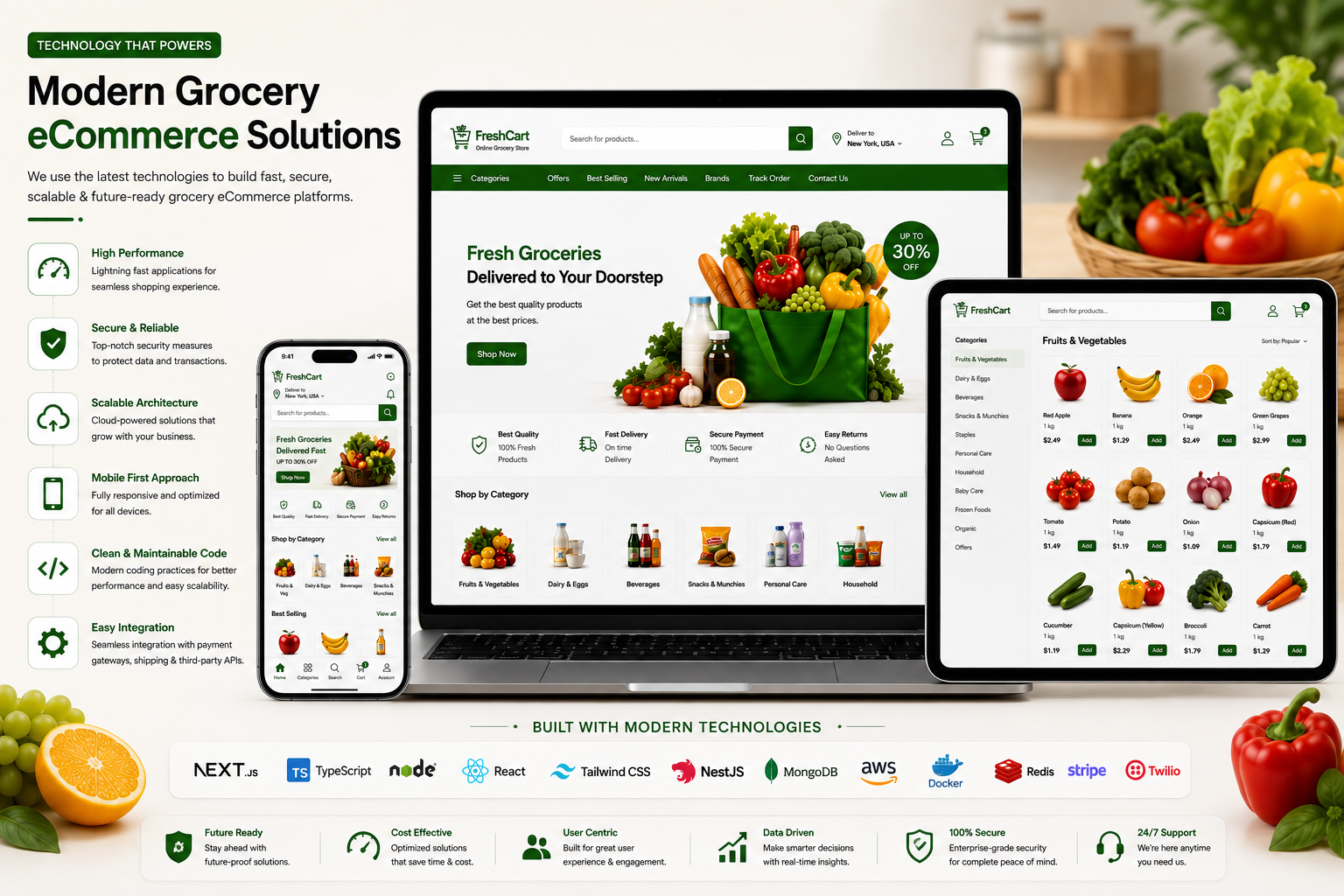
Why Businesses Should Invest in Grocery eCommerce Development
Consumer shopping habits have permanently shifted toward digital convenience. Businesses that embrace online grocery platforms today position themselves for long-term success by offering personalized shopping experiences, efficient delivery systems, and data-driven operations.
A custom grocery eCommerce platform allows businesses to maintain complete control over branding, pricing, inventory, customer relationships, and future feature enhancements. Unlike generic marketplace solutions, a custom platform can be tailored to specific business goals, operational workflows, and regional requirements.
Moreover, modern grocery applications can be integrated with artificial intelligence, machine learning, customer relationship management systems, enterprise resource planning software, accounting tools, payment gateways, logistics providers, and marketing automation platforms. This level of integration creates a unified ecosystem that enhances productivity, reduces operational costs, and improves customer retention.
As customer expectations continue to evolve, investing in a scalable and secure grocery eCommerce solution is no longer an option—it is a strategic necessity for businesses aiming to remain competitive in the digital marketplace.
Technology Stack for Grocery eCommerce Development
Choosing the right technology stack is one of the most important decisions when building a grocery eCommerce platform. A scalable and future-ready architecture ensures fast performance, strong security, seamless integrations, and the ability to handle thousands of concurrent users without affecting the shopping experience.
The technology stack should be selected based on your business goals, expected traffic, feature requirements, scalability needs, and long-term maintenance plans.
| Component | Recommended Technologies |
|---|---|
| Frontend | React.js, Next.js |
| Mobile App | Flutter, React Native |
| Backend | Node.js, Laravel, .NET |
| Database | PostgreSQL, MySQL, MongoDB |
| Cloud | AWS, Microsoft Azure, Google Cloud |
| Storage | Amazon S3 |
| CDN | Cloudflare |
| Authentication | JWT, OAuth 2.0 |
| Payment Gateway | Stripe, Razorpay, PayPal |
| Maps | Google Maps API |
| Notifications | Firebase Cloud Messaging |
| Analytics | Google Analytics 4 |
| Search | Elasticsearch |
| Cache | Redis |
Selecting modern technologies not only improves performance but also makes future feature additions easier without rebuilding the entire application.
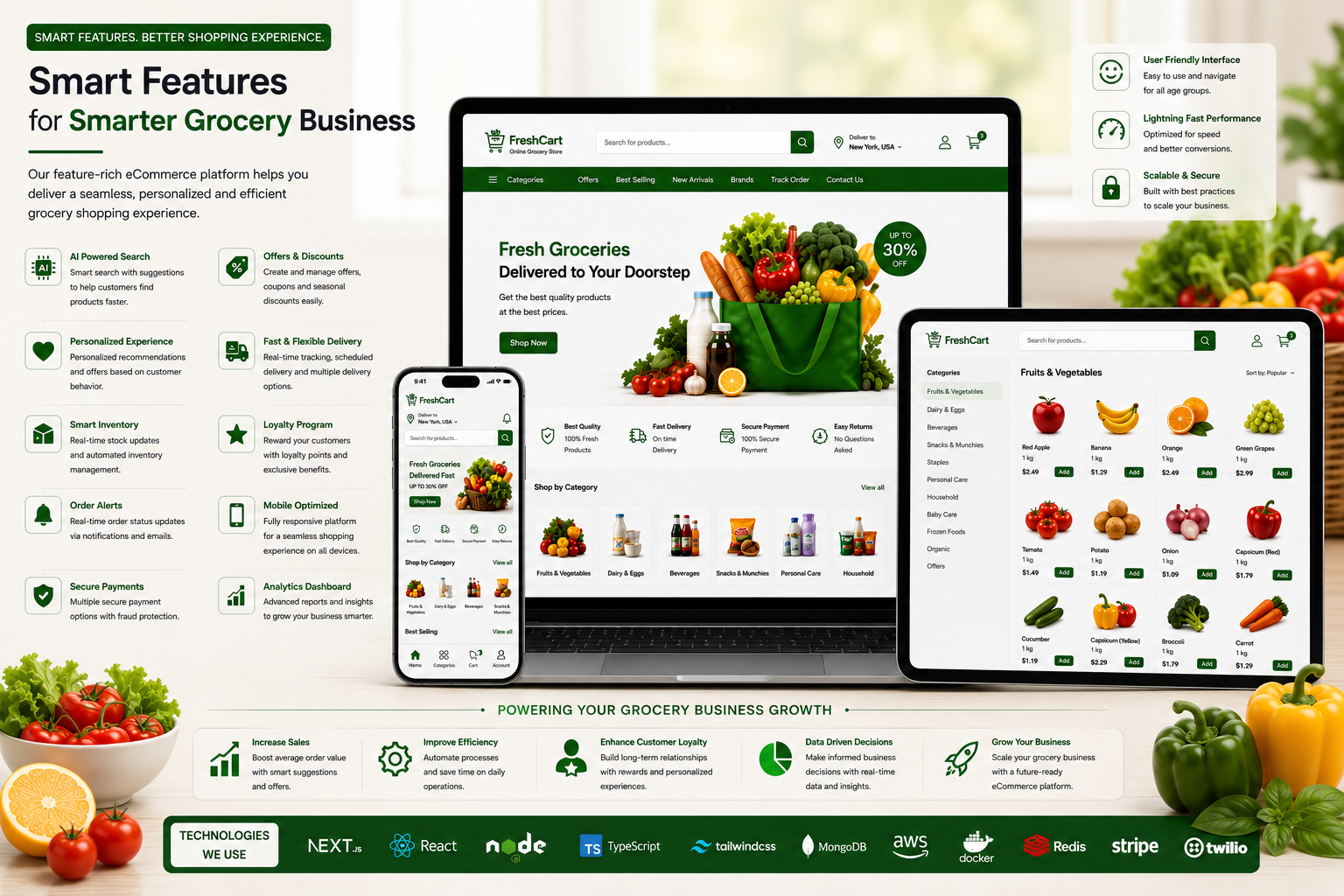
AI Features Every Modern Grocery App Should Have
Artificial Intelligence is transforming grocery shopping by making the customer experience smarter, faster, and more personalized. Businesses using AI-driven grocery applications can significantly improve customer retention, increase average order value, and optimize inventory management.
AI Product Recommendations
Artificial intelligence analyzes customer purchasing history, browsing behavior, seasonal trends, and shopping preferences to recommend relevant products automatically.
Example:
A customer buying pasta may receive recommendations for pasta sauce, cheese, olive oil, garlic bread, and beverages.
Smart Search
Instead of traditional keyword search, AI-powered search understands customer intent.
Example:
Searching for
Healthy Breakfast
may automatically display
- Oats
- Fruits
- Honey
- Milk
- Dry Fruits
- Peanut Butter
Voice Search
Customers can simply speak:
Add Milk, Bread and Eggs
The application automatically adds products to the cart.
Personalized Offers
AI analyzes shopping history and generates personalized discount coupons and promotional campaigns.
Instead of sending the same offer to everyone, each customer receives customized recommendations.
Demand Forecasting
Machine Learning predicts future product demand based on:
- Seasonal Trends
- Festivals
- Weather
- Historical Sales
- Customer Behavior
This helps businesses maintain optimal inventory levels.
Smart Inventory Management
Artificial intelligence automatically identifies:
- Fast-selling products
- Slow-moving inventory
- Near-expiry products
- Overstock situations
This reduces waste and improves profitability.
Customer Application Modules
The customer application is the face of your grocery business. A clean, intuitive, and user-friendly interface encourages repeat purchases and improves customer satisfaction.
Essential customer modules include:
- User Registration
- Login & OTP Verification
- Product Categories
- Smart Search
- Product Filters
- Wishlist
- Shopping Cart
- Checkout
- Saved Addresses
- Coupon Management
- Payment Gateway
- Order Tracking
- Notifications
- Reviews & Ratings
- Wallet
- Loyalty Points
- Referral Program
- Order History
- Customer Support
The application should also provide quick loading times, offline caching, multilingual support, and accessibility features to serve a broader audience.
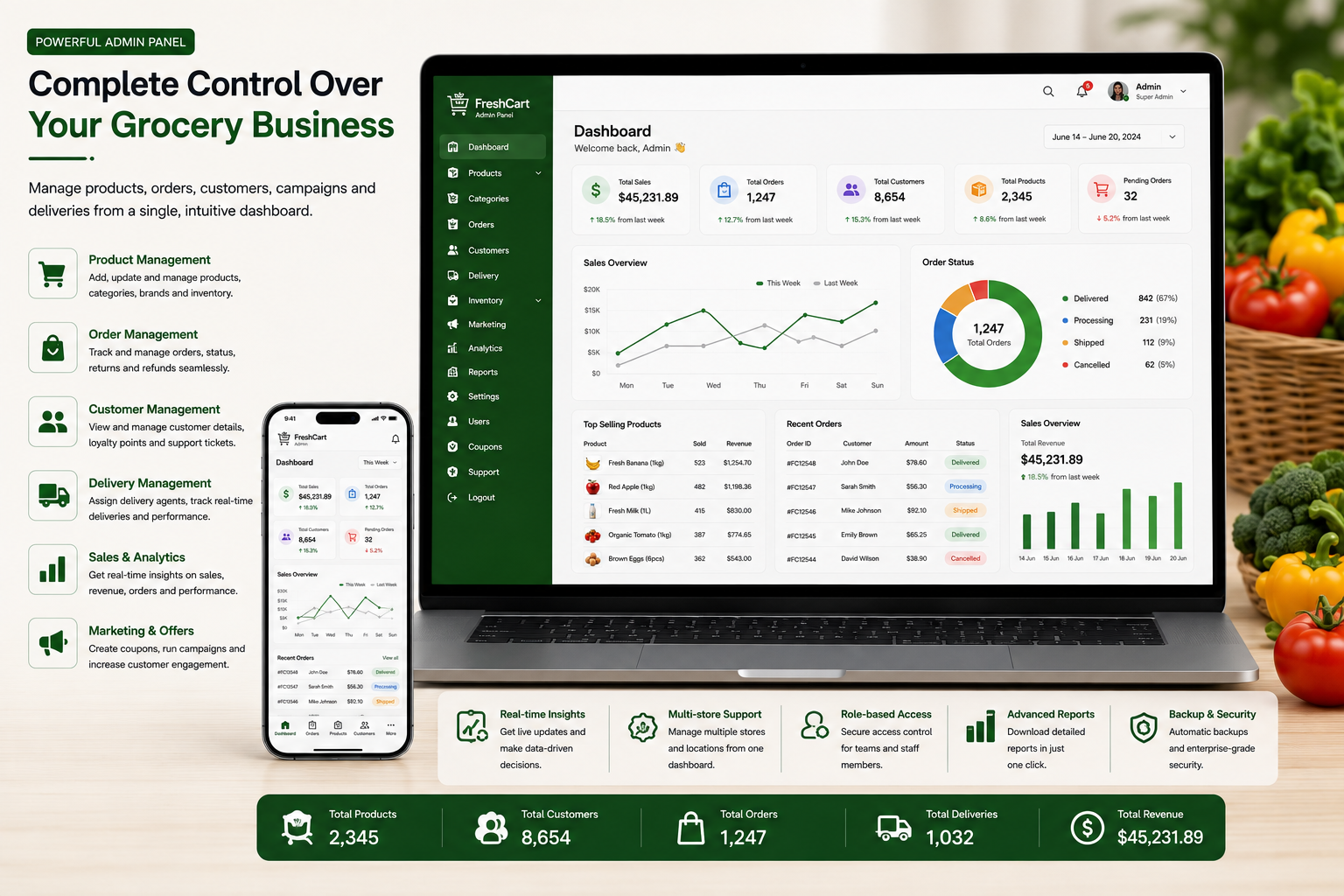
Admin Dashboard Modules
The Admin Dashboard acts as the control center for the entire grocery business.
Key modules include:
- Dashboard Overview
- Customer Management
- Product Management
- Category Management
- Inventory Control
- Warehouse Management
- Order Processing
- Delivery Management
- Coupon Management
- Marketing Campaigns
- Revenue Reports
- Sales Analytics
- Tax Configuration
- Banner Management
- CMS
- User Roles
- Notifications
- Support Ticket Management
An efficient admin dashboard enables businesses to automate daily operations while gaining valuable insights into sales performance and customer behavior.
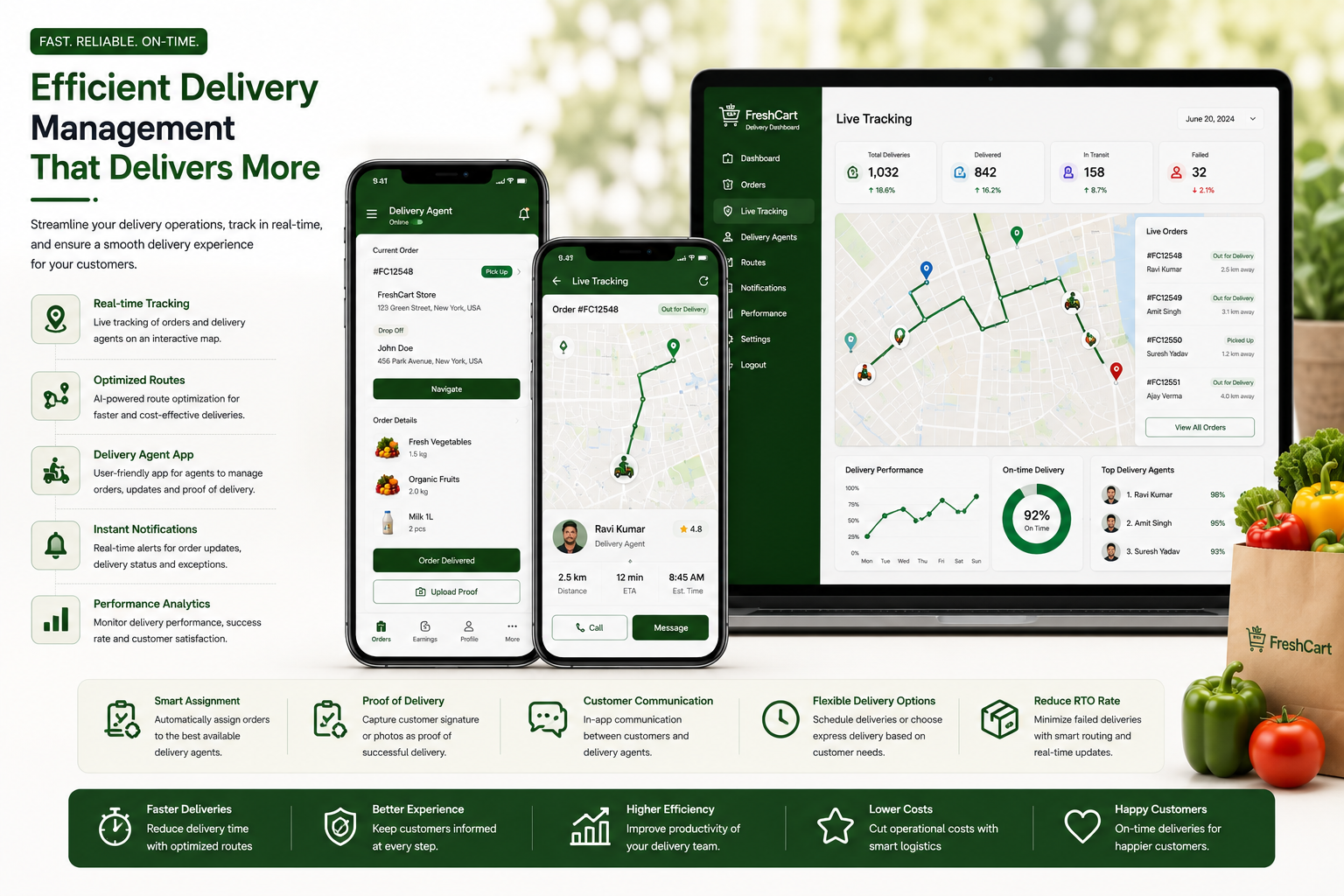
Delivery Partner Application
A dedicated delivery application helps streamline logistics while improving delivery efficiency.
Core features include:
- Delivery Notifications
- Accept or Reject Orders
- Live GPS Navigation
- Route Optimization
- Customer Calling
- Delivery OTP Verification
- Digital Signature
- Earnings Dashboard
- Order History
- Online/Offline Availability
- Wallet
- Performance Reports
Real-time delivery tracking improves transparency while reducing customer support inquiries.
Database Architecture
A grocery platform processes thousands of transactions every day. The database architecture must be optimized for speed, scalability, and reliability.
Core database entities include:
- Customers
- Products
- Categories
- Orders
- Order Items
- Inventory
- Warehouses
- Delivery Partners
- Coupons
- Reviews
- Payments
- Notifications
- Addresses
- Wishlists
Using relational databases such as PostgreSQL or MySQL ensures data consistency, while Redis can be used for caching frequently accessed information.
Cloud Infrastructure
Cloud-native infrastructure provides better scalability, reliability, and disaster recovery.
Recommended cloud architecture:
- AWS EC2 for application hosting
- Amazon RDS for managed databases
- Amazon S3 for image storage
- CloudFront CDN for global content delivery
- Elastic Load Balancer
- Auto Scaling Groups
- Route 53
- AWS WAF
- CloudWatch Monitoring
Businesses can also deploy on Microsoft Azure or Google Cloud depending on their preferred ecosystem.
Third-Party Integrations
A successful grocery platform requires multiple third-party integrations.
Popular integrations include:
- Stripe
- Razorpay
- PayPal
- Google Maps
- Firebase
- Twilio SMS
- WhatsApp Business API
- SendGrid
- Mailchimp
- Shiprocket
- Delhivery
- FedEx
- DHL
- Google Analytics
- Meta Pixel
These integrations improve payment processing, communication, logistics, and customer engagement.
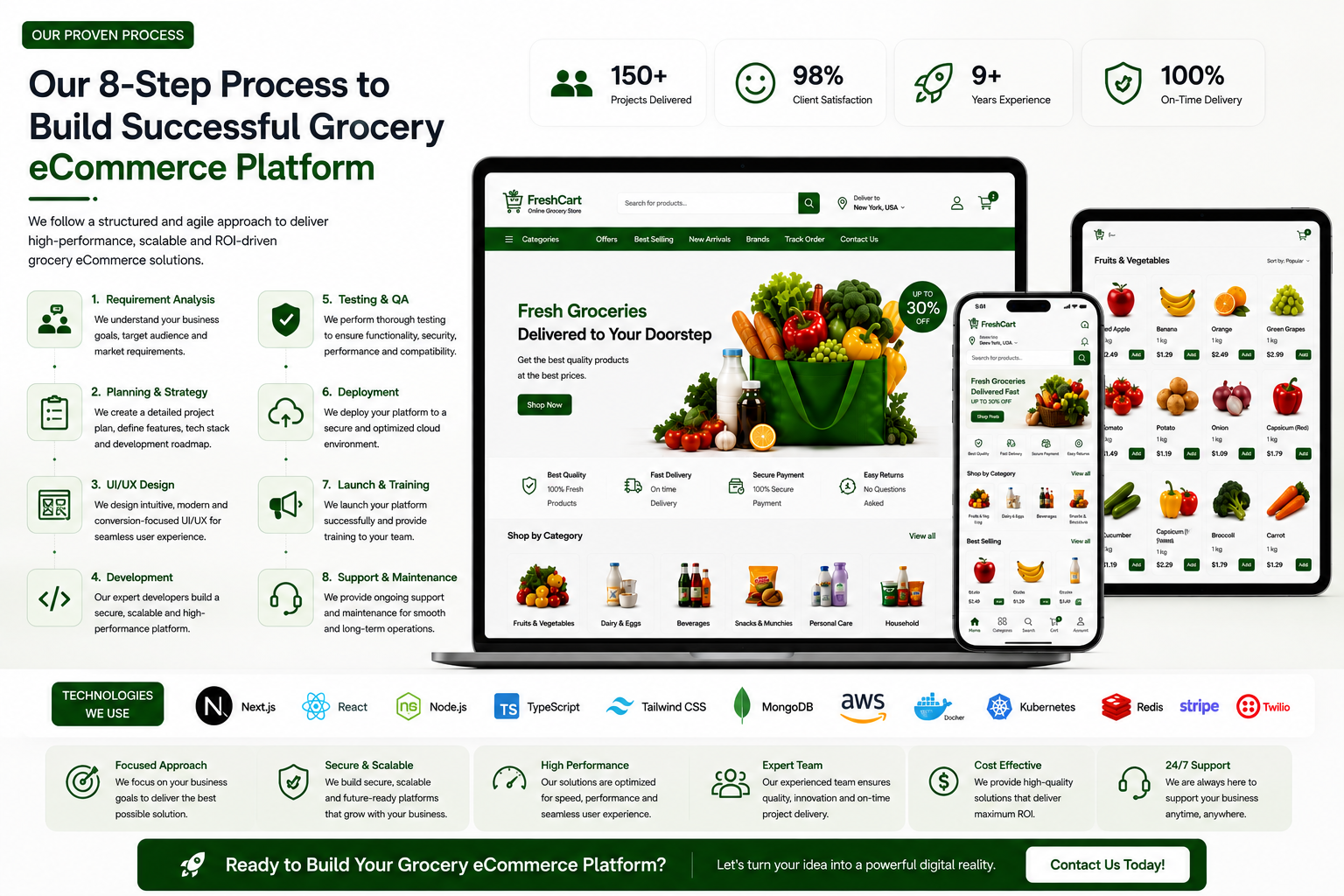
Grocery eCommerce Development Process
Building a scalable grocery platform requires a structured development approach.
Step 1 – Business Analysis
Understand business requirements, customer expectations, competitors, and operational workflows.
Step 2 – UI/UX Design
Create wireframes, user journeys, prototypes, and responsive interface designs.
Step 3 – Frontend Development
Develop responsive websites using React or Next.js and mobile applications using Flutter.
Step 4 – Backend Development
Build APIs, business logic, payment integrations, inventory management, and authentication systems.
Step 5 – Testing
Perform functional testing, security testing, performance testing, and user acceptance testing.
Step 6 – Deployment
Deploy the application to cloud infrastructure with CI/CD pipelines for continuous updates.
Step 7 – Maintenance
Provide ongoing updates, security patches, feature enhancements, and performance optimization.
Security Best Practices
Security is critical for protecting customer information and financial transactions.
Recommended practices include:
- SSL Encryption
- JWT Authentication
- Role-Based Access Control
- Two-Factor Authentication
- API Rate Limiting
- Data Encryption
- Secure Payment Processing
- Regular Security Audits
- Automated Backups
- Web Application Firewall
- DDoS Protection
- GDPR Compliance
- PCI DSS Compliance
Implementing these measures helps build customer trust while safeguarding sensitive business data.
Continue Reading
The next section will cover:
- Grocery App Development Cost
- Development Timeline
- Revenue Models
- Monetization Strategies
- SEO Tips
- Future Trends
- Frequently Asked Questions
- Conclusion
- Call to Action
- Image Prompts
- Internal Linking Suggestions
- Complete SEO Checklist
1. What is Grocery eCommerce Development?
Grocery eCommerce development is the process of building an online grocery website and mobile application that allows customers to browse products, place orders, make secure online payments, and receive groceries through home delivery or scheduled pickup. It includes inventory management, AI-powered recommendations, real-time order tracking, and customer management.
2. How much does it cost to develop a Grocery Delivery App?
The development cost depends on the project’s features, complexity, technology stack, supported platforms, and integrations. A basic grocery application costs significantly less than an enterprise-grade platform with AI, warehouse management, delivery tracking, and advanced analytics. Contact SoftwaresTech for a customized project estimate.
3. Which technologies are best for Grocery eCommerce Development?
Modern grocery platforms are commonly developed using Next.js or React for the website, Flutter for Android and iOS applications, Node.js or Laravel for backend development, PostgreSQL or MySQL for databases, and AWS Cloud for hosting, scalability, and security.
4. Why should I choose a custom Grocery eCommerce solution?
A custom grocery solution provides complete ownership, better performance, unlimited scalability, AI integration, enhanced security, flexible features, and seamless third-party integrations. Unlike ready-made software, it grows with your business and supports your unique operational requirements.
5. What features should a Grocery Delivery App include?
A modern grocery delivery app should include:
- User Registration & Login
- Product Search
- Smart Filters
- Shopping Cart
- Secure Checkout
- Online Payments
- Delivery Scheduling
- Live Order Tracking
- AI Product Recommendations
- Customer Reviews
- Loyalty Rewards
- Push Notifications
- Order History
6. Can Artificial Intelligence improve Grocery eCommerce platforms?
Yes. AI improves grocery platforms by providing personalized product recommendations, intelligent search, demand forecasting, inventory optimization, customer behavior analysis, chatbot support, and personalized marketing campaigns that increase sales and customer retention.
7. How long does it take to build a Grocery Website and Mobile App?
The development timeline depends on the project’s complexity and required features. A standard grocery platform generally takes a few months, while enterprise-level solutions with AI, multiple integrations, and custom workflows require a longer development period.
8. Is Grocery eCommerce software secure?
Yes. Professional grocery software includes SSL encryption, secure payment gateways, JWT authentication, role-based access control, automated backups, API security, firewall protection, and cloud infrastructure to ensure maximum security for customer and business data.
9. Can Grocery software manage multiple stores and warehouses?
Absolutely. Modern grocery eCommerce solutions support multiple stores, warehouses, delivery zones, inventory synchronization, pricing management, and centralized administration from a single dashboard.
10. Does Grocery software support online payments?
Yes. Grocery platforms support multiple payment methods, including UPI, Stripe, Razorpay, PayPal, Apple Pay, Google Pay, Credit Cards, Debit Cards, Net Banking, Wallets, and Cash on Delivery (COD).
11. Can I launch both Android and iPhone Grocery Apps?
Yes. Using Flutter, businesses can develop high-performance Android and iOS grocery applications from a single codebase, reducing development time, cost, and future maintenance.
12. Why choose SoftwaresTech for Grocery eCommerce Development?
SoftwaresTech specializes in building scalable, secure, and AI-powered Grocery eCommerce Websites and Mobile Applications using Flutter, Next.js, React, Node.js, Laravel, and cloud technologies. Our custom solutions include inventory management, secure payment integration, real-time delivery tracking, AI-powered recommendations, and ongoing technical support to help grocery businesses grow successfully.
People Also Ask
What is the best platform for Grocery eCommerce Development?
A custom-built Grocery eCommerce platform developed with Next.js, Flutter, Node.js, PostgreSQL, and AWS provides superior performance, scalability, security, and flexibility compared to generic website builders.
Which technology stack is best for Grocery Delivery Apps?
The recommended technology stack includes Flutter for mobile applications, Next.js for the website, Node.js or Laravel for backend development, PostgreSQL for the database, Redis for caching, and AWS Cloud for hosting and scalability.
Is AI important for Grocery Apps?
Yes. AI enhances customer experience through intelligent product recommendations, demand forecasting, inventory optimization, smart search, personalized offers, chatbot support, and business analytics.
Can a Grocery Website support Same-Day Delivery?
Yes. With delivery management systems, GPS tracking, route optimization, warehouse synchronization, and real-time inventory updates, grocery businesses can efficiently provide same-day and scheduled delivery services.
Ready to Build Your Grocery eCommerce Platform?
If you’re planning to launch a modern Grocery Website, Grocery Delivery App, or AI-powered Grocery eCommerce Platform, SoftwaresTech is here to help.
We build scalable, secure, and high-performance grocery solutions using Flutter, Next.js, React, Node.js, Laravel, and cloud technologies tailored to your business goals. From UI/UX design and custom development to AI integration, inventory management, secure payment gateways, real-time delivery tracking, and ongoing maintenance, we deliver complete end-to-end grocery eCommerce solutions.
Whether you’re a startup, supermarket, grocery chain, or enterprise retailer, our experienced development team can help you build a future-ready platform that increases customer engagement, streamlines operations, and accelerates business growth.
🚀 Contact SoftwaresTech today to discuss your Grocery eCommerce Development project and turn your grocery business into a successful digital platform.
Need Help Building Your Next Digital Product?
From web and mobile apps to cloud infrastructure and AI-powered platforms — our engineers can help you plan, build and scale with confidence.
Related Articles
Web Development Trends 2026: Building Fast, Secure and Scalable Websites
A practical guide to the web development trends shaping 2026, from React and edge functions to performance, security, accessibility, and choosing the right tech stack.
