

Choosing the right IT services company India can be one of the most consequential technology decisions a business owner makes. The wrong partner costs you time, money, and market position. The right one becomes a force multiplier for your growth.
This guide walks you through exactly how to evaluate and select the best IT services company in India in 2026 — what to look for, what to avoid, how pricing actually works, and what separates a reliable long-term partner from a vendor that delivers a project and disappears.
What IT Services Actually Covers
IT services for businesses span a broader range than most people realise when they first start looking. Understanding the scope helps you identify whether a provider genuinely covers your needs or specialises only in a narrow area:
- Custom software development — Building web applications, internal tools, and business platforms specific to your workflows
- Mobile app development — iOS and Android applications, from consumer apps to enterprise mobile tools
- Web development and design — Business websites, e-commerce platforms, and content management systems
- SEO and digital marketing — Search visibility, content strategy, paid advertising, and conversion optimisation
- Cloud infrastructure — AWS, Azure, and Google Cloud setup, migration, and ongoing management
- IT consulting and strategy — Technology roadmap planning, vendor evaluation, and architecture advice
- Cybersecurity — Vulnerability assessment, security audits, compliance, and ongoing monitoring
- Managed IT support — Day-to-day technical support, maintenance, and help desk services
A full-service IT company in India should cover most of these. A specialist firm covers one or two deeply. Knowing which you need shapes the entire evaluation process.
Why India Is a Leading Destination for IT Services in 2026
India has maintained its position as the world’s leading IT services destination for over two decades. The reasons are well-documented but worth stating clearly for anyone new to the decision:
- Talent density — India produces over 1.5 million engineering graduates annually. The depth of available technical talent, particularly in software development, cloud architecture, and data engineering, remains unmatched globally.
- Cost advantage — Senior development talent in India typically costs 40–65% less than equivalent talent in Western Europe or North America, without sacrificing quality at established firms.
- English proficiency — India ranks among the top five countries globally for English-language business communication, which significantly reduces the friction in client-facing technical work.
- Mature delivery processes — Established Indian IT firms operate under ISO-certified, CMM-level processes refined through decades of enterprise delivery. Project management and quality standards are not improvised.
- Time zone coverage — Indian working hours overlap with both European morning sessions and US evening hours, making real-time collaboration easier than many assume.
How to Evaluate an IT Services Company in India: 6 Critical Criteria
Most businesses approach vendor selection by comparing portfolios and rates. That misses the factors that actually determine whether an engagement succeeds or fails.
1. Depth of Experience in Your Domain
Portfolio projects should be more than screenshots and logos. Ask for specifics: What was the technical challenge? How many users does the system handle? What happened when something broke in production? Genuine experience shows in the details. A firm that has delivered five projects in your industry understands the implicit requirements, the regulatory constraints, and the operational edge cases that a general-purpose team will discover expensively mid-project.
2. Communication Responsiveness
Response time to your initial enquiry is one of the best predictors of how the firm will communicate during a live project. If a company takes 72 hours to respond to a pre-sales question, they will take longer when your production system has a problem at 11 p.m. Test this deliberately before signing anything. Ask a specific technical question and time the response. Quality of the answer matters as much as speed.
3. Transparent and Structured Pricing
IT services pricing in India typically follows one of three models: fixed-price projects, time-and-materials, or dedicated team (retainer). Each has legitimate applications. The red flag is a provider who cannot give you a clear breakdown of what is included, what triggers a change request, and what ongoing costs look like after handover. A firm that is unclear about pricing before the engagement starts will be unclear about invoicing throughout it.
| Pricing Model | Best For | Risk Profile |
|---|---|---|
| Fixed-Price | Well-defined scope, clear deliverables | Low client risk, scope creep disputes |
| Time & Materials | Evolving requirements, agile projects | Cost can exceed estimate if scope grows |
| Dedicated Team | Ongoing development, long-term products | Predictable monthly cost, flexible scope |
4. End-to-End Accountability
One of the most common mistakes businesses make is distributing work across multiple uncoordinated vendors — development here, SEO there, hosting managed by someone else entirely. When something breaks, everyone points somewhere else. A capable IT services company should be able to take accountability for the complete technical outcome: from infrastructure to application to search performance. This does not mean you cannot use specialists for specific work. It means your primary partner should be able to coordinate that work and own the result.
5. Post-Launch Support Structure
Software is not a one-time delivery. Security vulnerabilities are discovered. Third-party APIs change their interfaces. Traffic spikes at unexpected times. Ask specifically: What is the SLA for critical bug fixes? What is the process for a production outage? What does ongoing maintenance actually cost? A company that treats post-launch support as an afterthought will leave you managing your own production issues with code written by people who have moved on to other projects.
6. Business-First Thinking
The highest-quality IT firms in India do not just execute technical requirements. They ask whether those requirements solve the actual business problem. A development team that pushes back on a poorly conceived feature because they understand your users and business goals is more valuable than one that builds exactly what you specified without question. This mindset shows up in discovery conversations. Ask how they would approach a project you are considering. A purely technical answer — tools, timelines, headcount — is a signal. A business-context answer that addresses outcomes is a better one.
Red Flags to Avoid When Selecting an IT Company
- Unrealistically low quotes — Sustainable quality costs money. Quotes significantly below market rate typically involve junior-only teams, offshored work without oversight, or scope that will expand dramatically after contract signing.
- No references or verifiable case studies — Ask for at least two client references in your industry. If a firm cannot provide them, they cannot prove the experience they are claiming.
- Vague NDAs as the reason for no case studies — NDAs are legitimate but a firm with genuine enterprise experience can always provide anonymised case studies with the client’s permission.
- No clear ownership of deliverables — You should own all code, intellectual property, and assets. Any hesitation on this point in pre-contract conversations is a serious warning sign.
- Immediate agreement to all requirements — A good technical team asks clarifying questions. A team that says “yes” to everything before discovery is not doing their job properly.
What IT Services Companies in India Typically Charge in 2026
Rates vary significantly based on company tier, team location within India (Bangalore, Hyderabad, and Pune command higher rates than tier-2 cities), and engagement model. These are approximate 2026 market benchmarks:
| Service Type | Typical Rate (USD) | Notes |
|---|---|---|
| Senior Full-Stack Development | $30 – $55/hr | Tier-1 cities, established firms |
| Mobile App Development | $25 – $50/hr | iOS/Android or Flutter |
| UI/UX Design | $20 – $40/hr | Product design, not just visual |
| Cloud Architecture | $40 – $70/hr | AWS/Azure certified |
| SEO & Digital Marketing | $500 – $3,000/month | Retainer basis, result-oriented |
| IT Consulting (advisory) | $50 – $100/hr | CTO-level strategic guidance |
Frequently Asked Questions
What is the best IT services company in India for startups?
For startups, the best fit is typically a mid-size firm (20–100 people) with demonstrable product development experience, not just project delivery experience. Startups need partners who understand product iteration, can work with ambiguous requirements, and can scale the engagement as the company grows. Large IT firms are optimised for enterprise project delivery, which requires a degree of specification maturity most startups do not have.
How long does it take to see results from an IT services engagement?
For software development projects, a well-scoped engagement delivers an initial working prototype within 4–6 weeks and a production-ready MVP within 3–4 months. SEO and digital marketing engagements typically show measurable traction within 3–6 months. Managed IT support engagements take effect immediately from the transition date.
Is outsourcing IT services to India still a good decision in 2026?
Yes, for the right category of work. India’s competitive advantage has evolved from pure cost arbitrage to a combination of deep technical talent, mature delivery processes, and increasingly sophisticated product thinking. For software development, cloud infrastructure, and IT consulting, the quality-to-cost ratio remains compelling. The key is choosing a partner with genuine senior talent, not just the lowest hourly rate.
How do I protect my intellectual property when working with an Indian IT company?
A proper IP assignment clause in the service agreement transfers all code, design assets, and intellectual property to you upon payment. Established firms use standard international contracts (governed by Indian contract law and enforceable internationally) with explicit IP clauses. You should also ensure version control access is provided throughout the engagement so you are never locked out of your own codebase.
Related Services
- Custom Software Development Guide for Businesses
- Web Development Trends 2026
- Mobile App Development Guide 2026
- IT Consulting Services for Businesses
- Enterprise Software Solutions 2026
For industry benchmarks and additional context, we recommend the NASSCOM India IT Industry Report.
Conclusion
The best IT services company in India for your business is the one that takes accountability for your outcomes, not just your deliverables. That means experienced senior engineers who ask business questions, not just technical ones. It means responsive communication before, during, and after a project. And it means pricing that is transparent from day one, without the incremental scope additions that turn a reasonable budget into an unexpected invoice.
Take the evaluation seriously. Ask the hard questions during discovery conversations. The companies that answer them confidently — with specifics, references, and an honest assessment of what your project actually requires — are the ones worth working with.
Need Help Building Your Next Digital Product?
From web and mobile apps to cloud infrastructure and AI-powered platforms — our engineers can help you plan, build and scale with confidence.
Related Articles
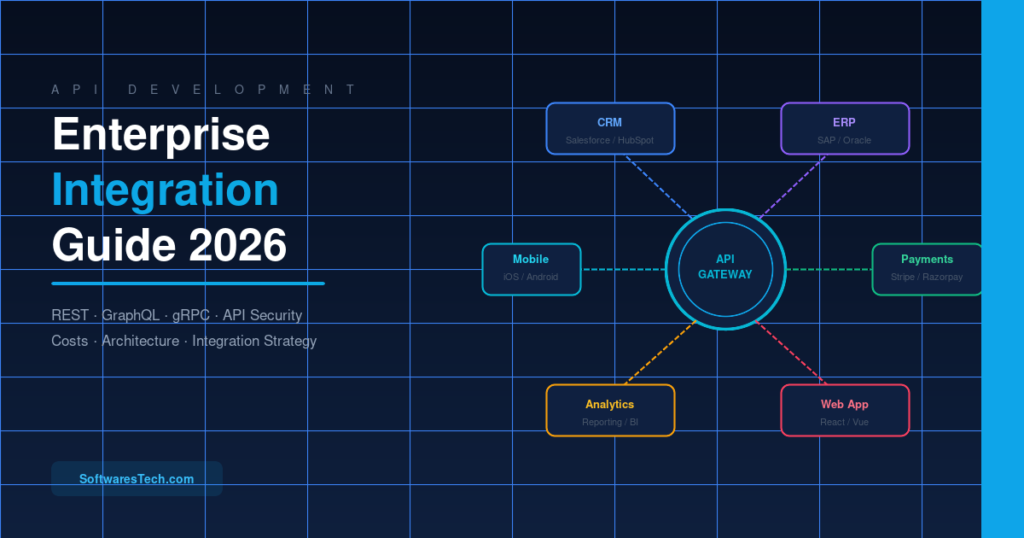
API Development for Businesses: The Complete Enterprise Integration Guide (2026)
This is the complete guide to API development for businesses — written for CTOs, engineering managers, and business owners who need to make real...

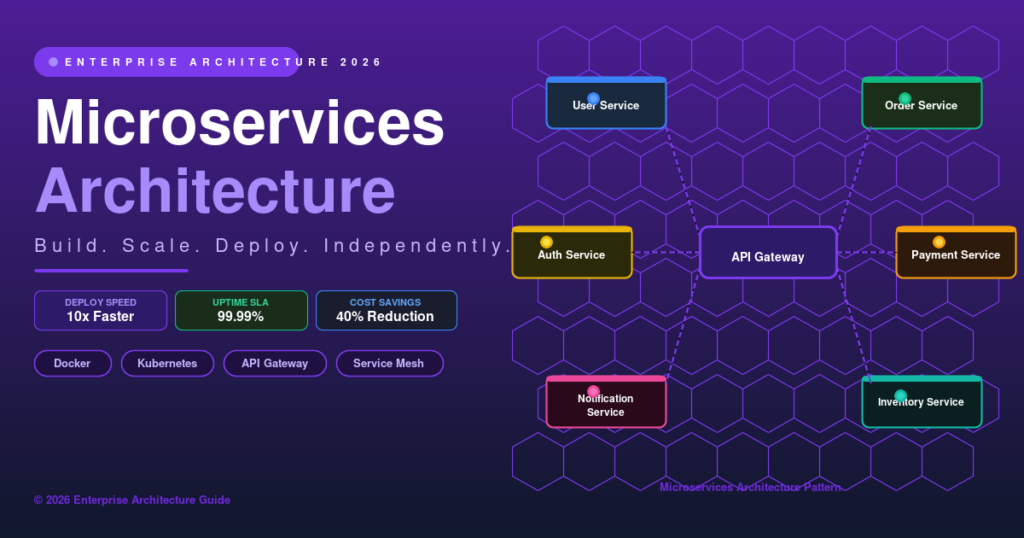
Microservices Architecture: The Complete Engineering Guide for 2026
A complete, practical guide to microservices architecture — covering service communication, data management, security, Kubernetes deployment, observability and real-world migration patterns for 2026.
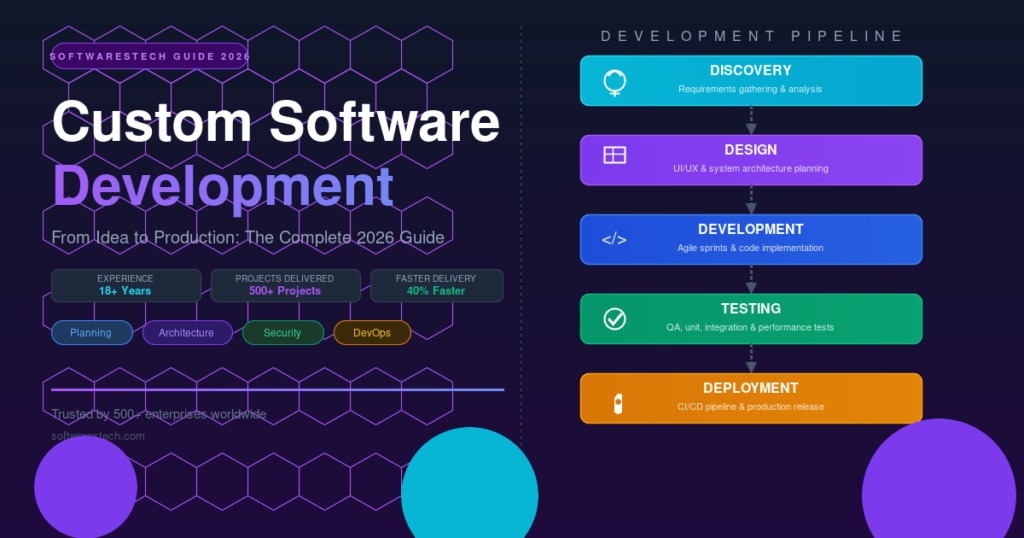
Custom Software Development: The Complete Business and Technical Guide for 2026
Everything you need to know about custom software development in 2026 — from discovery and architecture to security, DevOps, and ROI. A practical guide for business owners, CTOs, and engineering teams.