

As digital transformations accelerate across every industry, organizations face a double-edged sword: the cloud offers unparalleled agility, yet unmanaged cloud infrastructure quickly leads to massive cost overruns and security vulnerabilities.
Navigating cloud optimization in 2026 requires moving beyond basic cost-cutting. Modern enterprises need a cohesive technical blueprint that aligns infrastructure scaling, automated governance, and architectural security into a single operational roadmap.
Table of Contents
What Is Cloud Optimization?
Cloud optimization is the strategic process of continuously analyzing, sizing, and allocating cloud computing resources to achieve peak operational performance, strict security compliance, and maximum cost efficiency. Rather than viewing cloud management as a one-time audit, enterprise cloud optimization embeds automated resource scaling, workload rightsizing, and continuous cost monitoring directly into the software development lifecycle.
Need expert help with your project?Talk to our engineering team about your requirements.Get a Free Consultation
According to global technical benchmarks, enterprises that implement continuous automated optimization eliminate 25% to 40% of unnecessary cloud spending within the first 90 days.
Off-the-Shelf Management vs. Custom Managed Infrastructure
| Infrastructure Factor | Standard Off-the-Shelf SaaS | Custom Managed Infrastructure (Softwares Tech) |
| Scalability Limit | Restricted by rigid vendor server tiers | Dynamic auto-scaling tied to real-time traffic |
| 3-Year TCO | Escalating recurring subscription models | Optimized compute utilization; zero wasted overhead |
| Security Controls | Standardized, generic cloud permissions | Tailored Zero-Trust RBAC & strict data isolation |
| System Visibility | Fragmented monitoring across vendor tools | Unified single-pane-of-glass observability |
3 Pillars of Enterprise Cloud Architecture
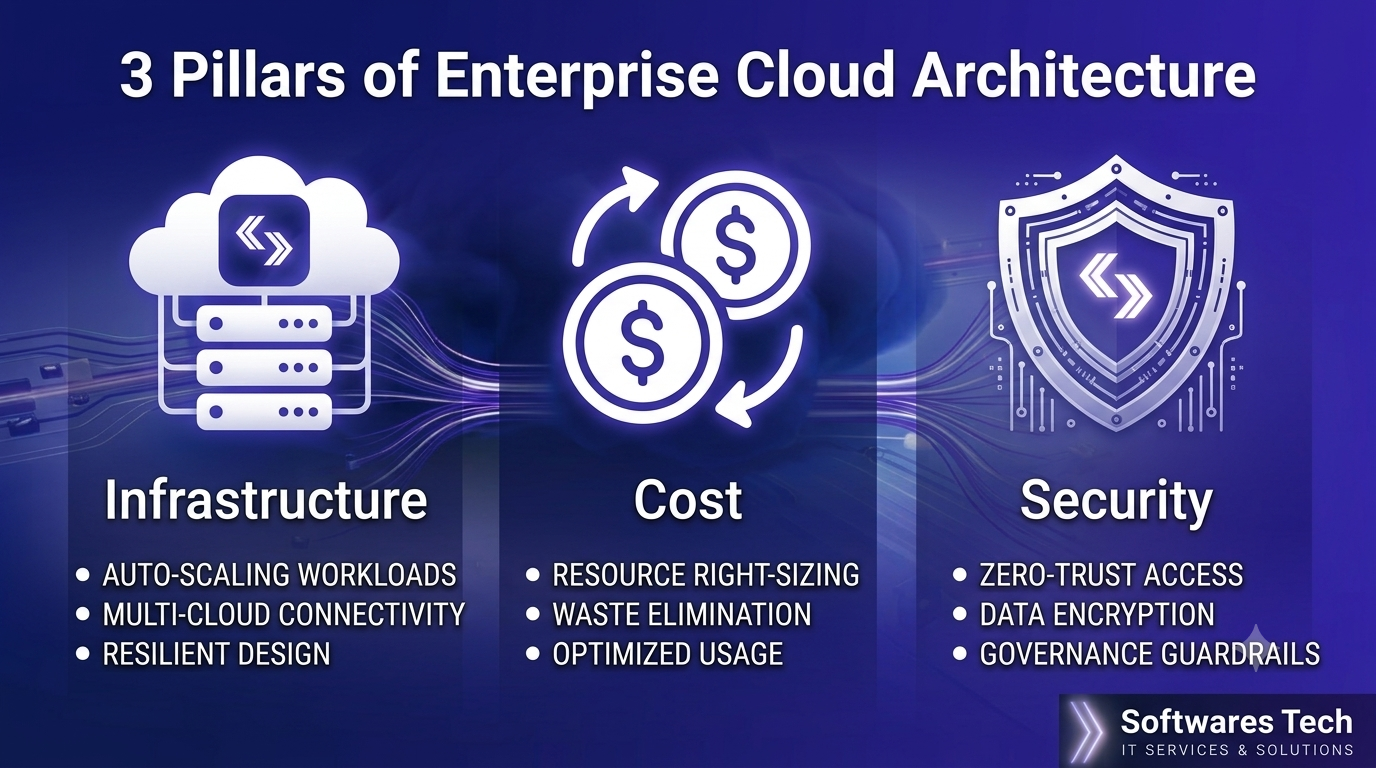
1. Infrastructure Modernization & Auto-Scaling
Legacy cloud setups often rely on over-provisioned virtual servers to handle unexpected traffic spikes. Modern cloud optimization leverages containerized orchestration (Kubernetes), microservices architecture, and serverless compute models to automatically match resource supply with real-time user demand.
2. Strategic Cost Elimination & Rightsizing
A major source of cloud inefficiency comes from idle instances, orphaned storage volumes, and unoptimized database queries. By implementing continuous telemetry and automated resource rightsizing, enterprises routinely reduce monthly operational expenditures without impacting system availability.
3. Enterprise Security and Governance
Data security must never be compromised for performance. Implementing Zero-Trust network access, automated vulnerability scanning, and strict data encryption protocols ensures your cloud infrastructure adheres to SOC 2 Type II, HIPAA, and GDPR standards from day one.
Cloud Investment & Implementation Scope
| Scope Tier | Core Engineering Deliverables | Estimated Investment | Timeline |
| Infrastructure Audit & POC | Resource waste identification, security assessment, and architecture design | $15,000 – $45,000 | 2–4 Weeks |
| Workload Migration & Rightsizing | Containerization, database tuning, and automated CI/CD pipeline integration | $50,000 – $150,000 | 8–16 Weeks |
| Enterprise Cloud Transformation | Multi-cloud deployment, Zero-Trust security setup, and 24/7 MLOps/DevOps monitoring | $150,000 – $500,000+ | 4–9 Months |
Why is cloud optimization essential for growing businesses?
Cloud optimization prevents unmanaged infrastructure expenses from eroding profit margins. It ensures applications maintain high availability and fast load speeds during traffic spikes while scaling down idle compute power during off-peak hours to minimize operational costs.
How much can an enterprise save through cloud optimization?
Most enterprises achieve a 25% to 40% reduction in monthly cloud costs within the first 90 days of structured optimization. Savings are generated by eliminating unused storage, rightsizing compute instances, and leveraging reserved or spot instances strategically.
What services are included in Managed IT & Support?
Managed IT support encompasses 24/7 system uptime monitoring, network administration, automated data backups, disaster recovery orchestration, security vulnerability patching, and continuous infrastructure optimization.
Transform Your Digital Infrastructure with Softwares Tech
Building a high-performance, cost-effective cloud environment requires specialized engineering experience. At Softwares Tech, we design, migrate, and optimize cloud architectures tailored specifically to your business goals.
-
💡 Ready to eliminate cloud waste and boost application performance? Schedule a Free Engineering Consultation with Softwares Tech
-
🚀 Explore our full suite of IT solutions: View Custom Web & Cloud Development Packages
Need Help Building Your Next Digital Product?
From web and mobile apps to cloud infrastructure and AI-powered platforms — our engineers can help you plan, build and scale with confidence.
Related Articles
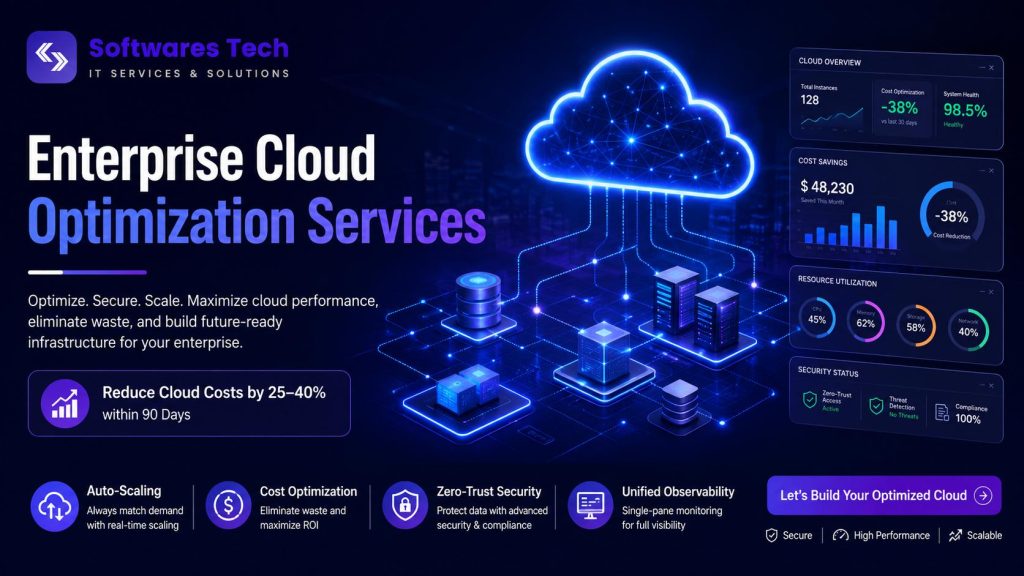
Enterprise Cloud Optimization Services in 2026: The Complete Infrastructure Guide
As digital transformation accelerates across every industry, modern enterprises face a double-edged sword: cloud environments offer unparalleled agility, yet unmanaged cloud infrastructure quickly leads...

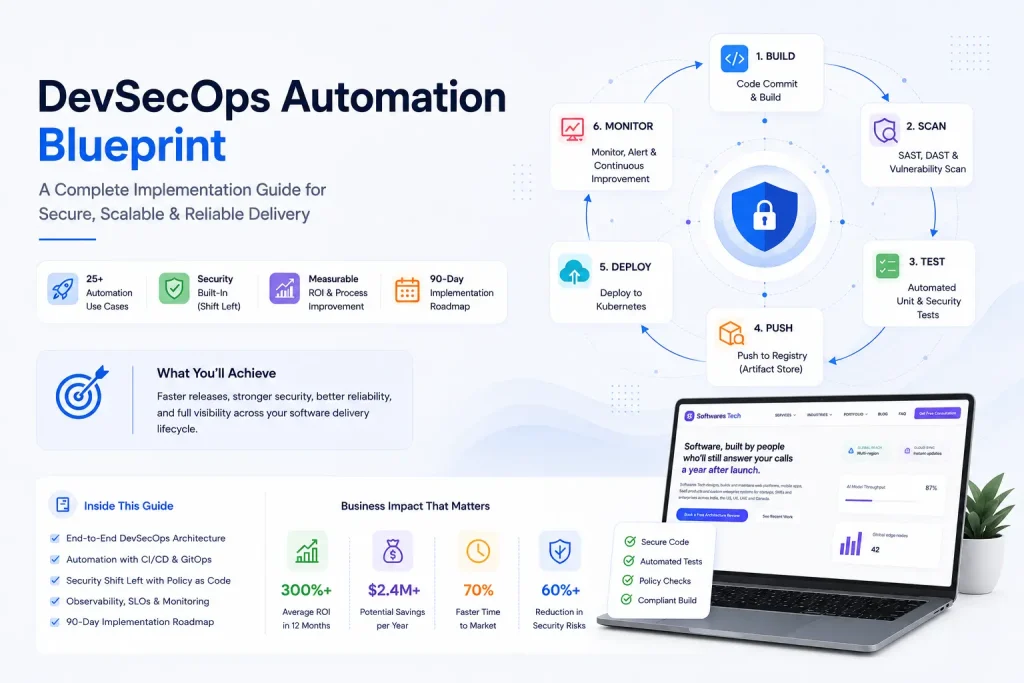
DevOps Best Practices in 2026: From CI/CD to Production Monitoring
If you've spent any real time on call, you already know that "DevOps" stopped being a job title years ago and became a shared...

Kubernetes in Production: Lessons Learned from Scaling Enterprise Applications
The first time you run kubectl get pods against a production cluster that's serving real customer traffic, something shifts. The conference talks, the "getting...